TCC 22. Voix des Femmes - Professor Nadine Silverman

 Spotify
 Apple Podcasts
 Amazon Music
 YouTube
 iHeartRadio
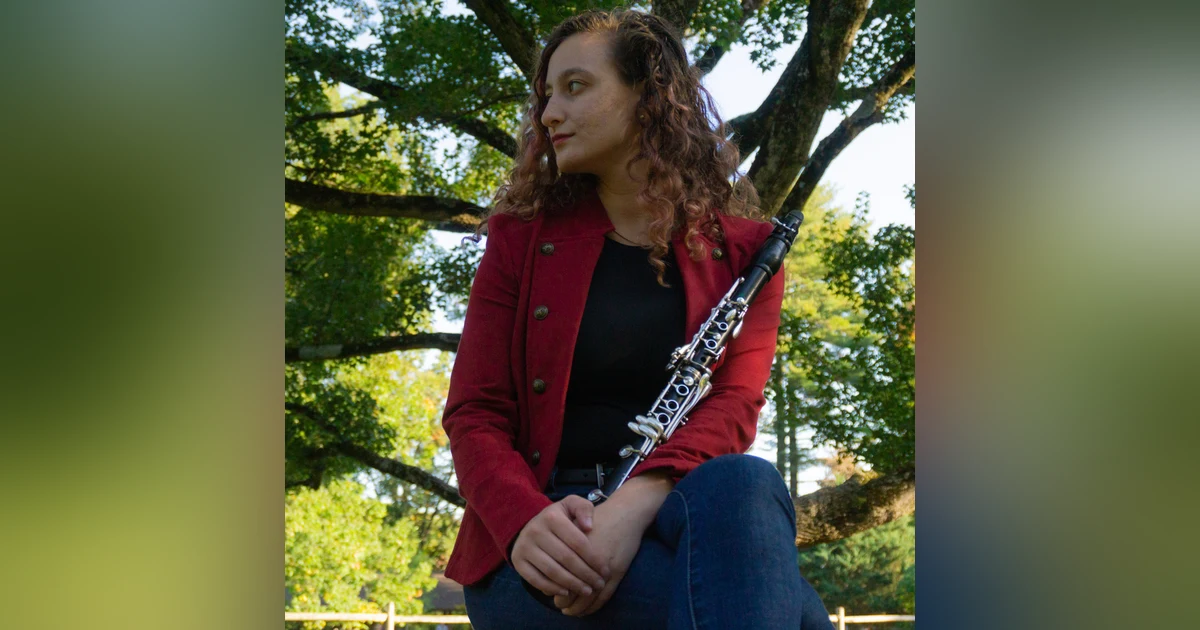
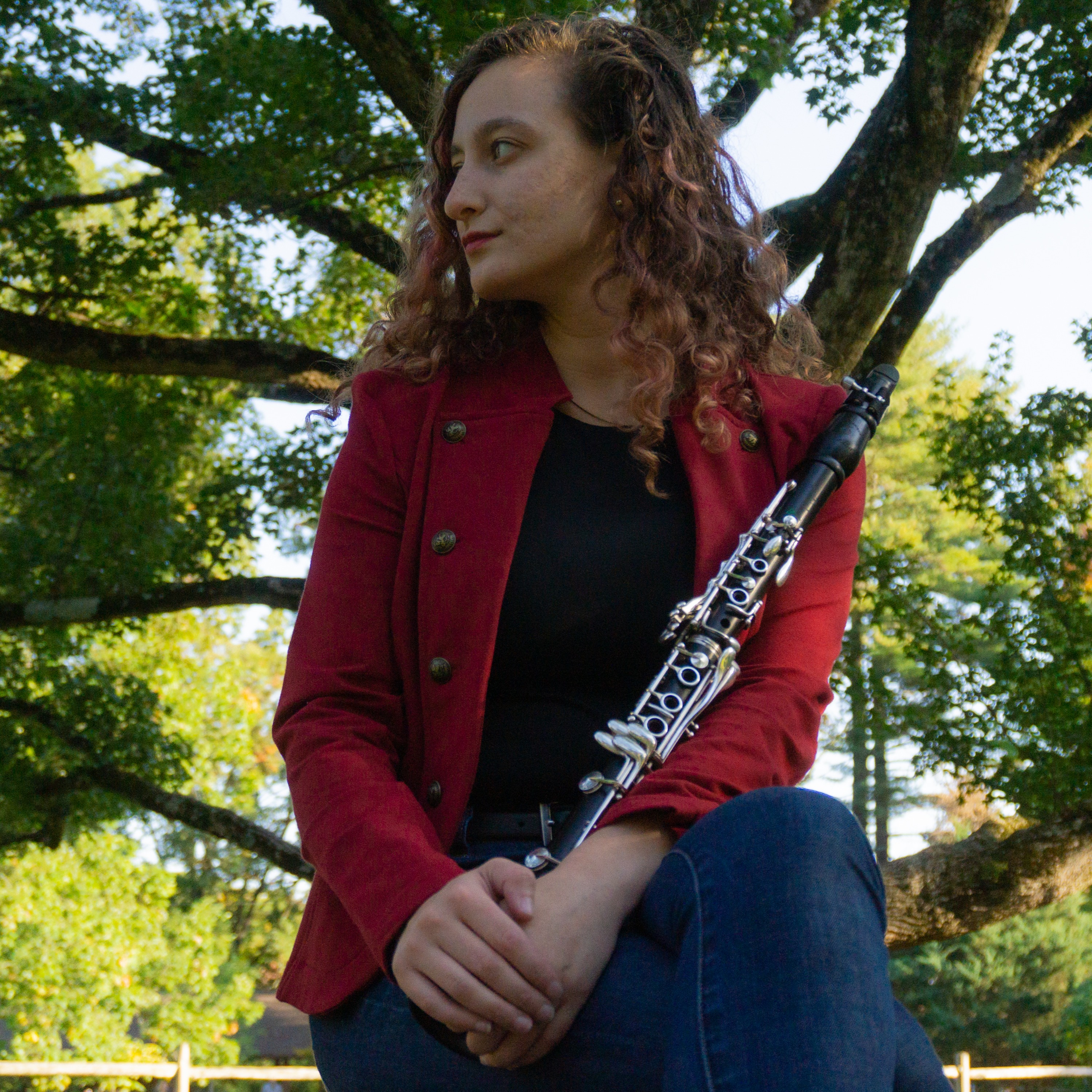
 This episode of the Theorist Composer Collaboration podcast features Professor Nadine Silverman and her piece Voix des Femmes. Music theorist Aaron D’Zurilla discuss with Professor Silverman her background, styles of composition, networking, subverting sexism in musical form, pushing for representation, and other issues in modern music theory/composition.
Professor Silverman contact:
Website: https://www.nadinesilverman.com/
Email: nadinesilvermanmusic@gmail.com
Instagram: https://www.instagram.com/nadine.clarinet/
Donate to the TCC:
https://buymeacoffee.com/tccollaboration
A full episode transcript is also available on our host website on the corresponding episode page a few weeks after the initial upload at https://www.tccollaboration.com/
Make sure to follow the TCC social media and hosting accounts on:
Facebook: https://www.facebook.com/profile.php?id=61557900086297
Instagram: https://www.instagram.com/tc_collaboration/
Website: https://www.tccollaboration.com/
Performed by the Voix des Femmes ensemble:
Eb/Bb Clarinet: Donna Noyes
Bb Clarinet: Laura Grantier
Bb Clarinet: Melissa Lander
Bass Clarinet: Jennifer Everhart
[Professor Silverman] I'm great. How are you?
[Aaron] I'm doing fine on this wonderfully humid Tallahassee morning. You're in Pennsylvania, right?
[Professor Silverman] I am in Pennsylvania. I'm in Norristown, Pennsylvania.
[Aaron] Well, what's the weather like up there?
[Professor Silverman] Um, sunny and not that humid, but still a little bit.
[Aaron] Oh, wouldn't it be nice? I guess I'll just have to wait until late September. All that aside, Professor Silverman, or is it okay if I call you Nadine?
[Professor Silverman] Yeah, absolutely.
[Aaron] How about, go ahead, introduce yourself personally, professionally, academically, whatever you choose.
[Professor Silverman] I am a musician, a composer, clarinetist, collaborator, and a lifelong learner.
[Aaron] Yeah, yeah, of course. And so, you know, it's, we just had a conversation, or brief conversation, before starting to hit record on whether or not you wanted to be introduced as professor, because you have something quite fun, quite exciting happening in your life right now. Do you want to talk about that a little bit?
[Professor Silverman] Yeah, of course. I have recently been appointed instructor of music theory, composition, and aural skills at West Chester University in Pennsylvania. So I am starting on Monday, officially Professor Silverman.
[Aaron] Wonderful, wonderful. Super exciting, super exciting, especially someone who is so young. That is literally the dream for all of us, for me, quite frankly. I mean, it takes so much to get to that point. So you're teaching, you said you're doing music theory and aural skills. See, at Florida State University, how the graduate program or how the professor-student relations work is essentially all of the undergrad music theory and aural skills classes are taught by GAs, taught by graduate students such as myself. I'll be starting to teach songwriting next week, which I'm very excited for, and undergrads with a couple exceptions, but largely do not directly interact with the supervising faculty member. I mean, of course, if they need something, they can, and specialty classes, sure. But that's mostly grad students who take classes directly from the faculty. How does it work at the university that you're starting to work at?
[Professor Silverman] Well, from my understanding in Pennsylvania, graduate students can't teach classes. So it's all professors. Yeah, it's, I think, specific to Pennsylvania. At least that's what I was told when I was an undergraduate. But we have a graduate assistant for the department, and he does kind of behind the scenes administrative stuff. He's not allowed to actually even grade things. He can help us tabulate grades and put together materials like answer keys. But he's not allowed to teach a class or a section. He is allowed to tutor. So that's kind of what the graduate assistant responsibilities are, at least at West Chester. I'm pretty sure it's a statewide public school thing, but I'm not entirely positive, but I think it is. It's Pennsylvania.
[Aaron] Fair enough, fair enough. So I put this a little bit forward in the questions, but since we're on this professorship, not to like obsess on something, you know, it's it's an amazing this is the ultimate goal of so many people, you know, further than just finding, well, maybe even how to find the right opportunity. Like I said a couple of times, I hope to be in your position or somewhere similar. And I'm pretty sure all my colleagues do as well. And so many others do. What can you say about your academic and professional journey? I don't know, give some tips, some insight. What was it like? What led you up to here?
[Professor Silverman] It's a lot of working your network, I guess. And it's not always an easy task. There's a lot of a lot of emotional energy that goes into it. I am lucky to be an extrovert in that in that sense. But it, you know, even if you're not, just don't miss a networking opportunity if it presents itself to you. A lot of it, I was told to go to festivals as an undergraduate, and I always had to work over the summer and take classes. And so I never actually got to a festival. And I knew that that's where a lot of networking and those those connections with people around the country got made. The first festival I went to, I was a grad student. It was only a week long because it was the most time that I could I could go. And that festival actually yielded two commissions today, like so far. And so really, like, don't ever assume that somebody you meet in your field is not going to be able to be some sort of asset in your career moving forward. The music world is so, so small and everybody knows each other. You have second level connections with so many people that are really important and probably first level connections with people who are really important. And so I never like to write anybody off as like a bridge that I'm willing to to let go or to burn. One thing that you can do just to everybody when you're in school to get your teachers to be those good connections for you, just act like you care. Even if you kind of don't.
[Aaron] I was about to say, hopefully you do.
[Professor Silverman] Yeah, I hopefully you do. Like, theoretically, you're paying money to go to college. You should probably care. But if you don't act like you do, it goes a long way with with faculty. You build up that good positive credit with faculty. You know, like I am always professionally dressed, even when I was a student. Sometimes it's hard because sometimes you just roll out of bed and you're your 8 a.m. class and you're like, I'm just going to wear sweatpants. And you can. But, you know, like when you show up to your performances, you show up to your juries, when you show up to anything like that evening performances, just present yourself professionally. Really, really try to work on that if it's not a skill you have. Learn how to write a good email. And I guess the story that I have a story that kind of goes along with it just in how random it can be. So in the fall of twenty nineteen, I had just graduated from my undergraduate. I was preparing my grad auditions that semester, so I didn't have anything really to do other than just practice and work. But our band director was going on sabbatical and we were going to have three guest conductors throughout that that semester. And so I said, OK, I'll play like a utility clarinet if they need one. I'll play Contra or whatever. And it turned out that they needed a bass clarinetist. And so I played bass clarinet for three concerts. I loved playing in the ensemble and it was just a lot of fun to do. So I figured, you know, a couple of nights a week, I'll go play in a band and have fun. And one of those graduate conductors or one of those guest conductors, sorry, he was a retired Navy band conductor and he's the current conductor of the Maryland Winds. And I didn't think much of it. I didn't think we would really get to know them at all. But he happened to be the guest conductor who was working with all the graduate conductors on some of their repertoire. And one of those graduate conductors was asked to play a piece that I wrote that I thought the main conductor was going to conduct, but the graduate conductor did it. And so he actually worked with the guest conductor on my piece. I didn't even know this until the guest conductor approached me in the hallway and said, hey, great piece. And I had to like buffer. It took me a few seconds to even know that he was talking to me. But, you know, so he had that brief interaction, three years go by. I gave a Facebook message to him at my in my 8 a.m. graduate seminar. And he's asking if I have any clarinet quartet music because he has a friend who wants to program a concert of clarinet quartet music by women. And there's not many pieces. So he put me in touch with a woman named ??Laura Grant here??. And that is how the piece that we're going to talk about today got written. And that relationship has spurred an entire concerto commission by this point. So just having that random person had heard my music three years ago and then thought of me in a moment. And I've had four pieces played at this international festival because of that relationship and a brand new commission. It's like insane how these things just kind of tumble in these connections that you don't think are going to amount to anything one day just randomly like happen. I mean, it does take some luck, obviously, but just to make yourself the person that people think of first for an opportunity. That's a really valuable thing to be able to do.
[Aaron] Oh, for sure. And to redouble on something that you said earlier, I'm also thankful that I don't know if I'm fully an extrovert, but at least a people person or at least comfortable talking to people. Why would I be here, you know, talking to you or talking to all these other people? Because, you know, as you said, so much lives and dies on your connections, your networking and your, may I say, collaboration. And yeah, I mean, not everything pans out. Honestly, most things don't, but it's just shooting that shot as many times as possible. You know, it's you're a good example for, you know, not knowing how small the music world is in my case, because, you know, I go through Instagram and Facebook to find composers that I'm not personally familiar with, you know, so I don't get stuck in, you know, this is not the FSU show or the UF show. Though for the past couple of weeks, it might have been the UF show. But, you know, you knew a bunch of the people that were featured on here when really I just came across your website, was looking at your music, and I thought it pertinent to invite you on. And speaking of your music, so even though you're going, you're an adjunct professor of music theory and aural skills, of course, as you've said, you are a composer. And so you're talking about your music, how some of that stuff is getting put out into the world. How would you describe yourself as a composer, whether that be a style, a time period, compare it to another composer? How would you describe your music?
[Professor Silverman] I definitely would describe it as it's kind of like tonal adjacent. So I don't consider myself strictly tonal or strictly atonal. I'm kind of somewhere in between. I definitely use a lot of tonality. It's almost secondary to me. I don't think too hard about it. I kind of subscribe to if it sounds good, it is good. And obviously, if it sounds good, it's subjective. But if I like how it sounds, I'm happy to put it out into the world. And as a composer of instrumental music, it's really important for me to be a good collaborator. And that it keeps coming back. But I love learning from people who play instruments that I don't play. It's my favorite part of composing, is putting my music in front of people who don't play my instrument and then getting that feedback from them in real time. Like, hey, maybe reconsider X run because of fingers, things that you can't predict because I don't play every instrument. And I'm always willing to take that feedback from performers because I know that they know their instrument better than I do.
[Aaron] Yeah. Yeah. You know, what sticking with the binary comparison, you know, you tonal, atonal or post whatever. How about programmatic versus absolute? Where do you put yourself between that?
[Professor Silverman] That's an interesting question because there have been a few pieces that I've written and I'm like, I don't want to write a program note. I don't frankly think it's about anything. And the first question I get asked performers, audience members is, oh, what's this piece about? Like, you have to speak about this piece. What do you get to say? And so I kind of just become a programmatic composer. There are certain pieces where I write and I'm like, this is for sure about this exact place. This is for sure about this exact feeling, this exact event. I write a lot about nature and hikes, but then there are some pieces that I write. I have another clarinet quartet that I could have called clarinet quartet number one and been perfectly satisfied. But I kept getting asked what it was about. So I just made something up.
[Aaron] Yeah. So about that music meaning, the push or at least the mild pressure on composers to have a programmatic meaning of some kind. I've seen that as pretty consistent across the months I've been doing this podcast and maybe a little bit before. And I'm going to ask you how you feel about that. But I don't know. I've said this before on this podcast as a casual music listener and enjoyer and sometimes a theorist, I always appreciate a good story or maybe not necessarily a story, but a vibe, an intentional mood or feeling. You know, I think it was last week or something. I said that it's always really cool when the cool chords mean something cool or man, that's dumb.
[Professor Silverman] But no, but you're right.
[Aaron] You get what I mean. Yeah. So I personally, as just a person, non-academic or professional, don't find too much personal value in pure absolute music, especially when it's presented that way. What's your opinion on that?
[Professor Silverman] I agree with you probably 90, 95 percent of the way. It's the few pieces that I write that I genuinely am. Like, I just wrote this because and it doesn't have a deeper meaning. And I would like to have the, I guess, flexibility with audiences to not have to speak about it if it doesn't mean anything or just to be like, hey, this is pretty. wrote it. Listen. But it's rare that I actually write a piece like that. It's only happened twice. And one of them is not, I think, out into the world. A lot of the times I'll get asked to write something about a specific vibe or mood or place or concept. And that kind of does that work for me. So I don't have to worry about it. I don't have to come up with it. I have an idea in my mind. I'm thinking specifically about this one piece that I wrote that is out in the world that has no deeper meaning for me, at least. It just, I just wrote it. I had to write something. It was the pandemic. I was like, I haven't written anything in a year and a half because I have a pandemic brain and I need to write something. And so I wrote this clarinet quartet and it ended up being really beautiful. And a lot of people are enjoying playing it. But I can't come up with anything, with a story. I just don't have one. And I do keep getting asked what it's about. And I'm like, well, all my other music, I know what that's about. Is that, can that be enough? Can we just say that this one is just nice? So that's kind of, I guess, the 5% of, I just want the freedom to do something that isn't. But 95% of the time, I write things that are programmatic, intentionally.
[Aaron] Fair enough. I sometimes get, not from this podcast, but just like, I don't know, doing my work at Florida State. Doing my work at Florida State, I typically use the word programmatic a little too fragrantly. For example, when getting into a conversation with someone about programmatic or absolute music, I typically think of it as absolute is usually a black and white thing, whereas levels of programmaticism has many different shades and that can come in many different forms. And when I'm talking to someone about, let's say, some pieces from the classical canon, you know, if someone is defending pure absolute music, I'll point to Mahler's, like, Farewell Symphony. In my opinion, the last movement where it fades away is, it's probably not the most accurate, I wouldn't tell a composition or theory student this, but to me, that is some level of programmaticism, or at least the audience has created it in a mythology over time. And so that's one of the reasons why that's such a special symphony, or at least a portion of it. And it's like how I got into a bad habit of calling almost everything in music counterpoint, when I know counterpoint is like a traditional study of, you know, early tone or whatever, like line against line, I think about it more broadly just voices moving within music, which I get, whatever, whatever, you get kind of rambling on. Okay, let's focus back to you and your music instead of broad things, you previewed it a little bit. But today we're talking about a piece of yours, Voix des Femmes. So let's start with the title. Well, first, why is it in French? There's one point. Yeah, go ahead, go ahead.
[Professor Silverman] So the piece, I actually didn't choose the title. It is named after the commissioning quartet, the Voix des Femmes quartet.
[Aaron] Oh, okay, that makes sense. All right, fair enough. And voix is four, right? Yeah.
[Professor Silverman] Voices, it's voices. So it means women's voices.
[Aaron] Yes. Man, I need a brush up on my French. You know, we were talking about that earlier. Took three years of in high school and forgot all of it probably should have taken Spanish, but oh, well. So Voix des Femmes. So that's the name of the ensemble.
[Professor Silverman] Yeah, it's French for women's voices.
[Aaron] Women's voices. And so on women's voices. Well, that makes even more sense with the intention of the piece. And I'm even more excited to talk to you about this because you are clearly a qualified music theorist as well. Can you talk a bit about you detail it on your website page, which will be in the description of this episode, if you want to see the full performance video by the ensemble, which is linked on Nadine's website. Can you talk a bit about Voix des Femmes, what you were thinking about with it, the intentionality of the piece?
[Professor Silverman] There were a few different, I guess, catalysts for this piece. One of them was what I was asked to do. And what I was asked to do was kind of now looking back a little bit mild. I was asked to write a four movement clarinet quartet in standard formal structure. So fast, slow, scherzo, finale with generally traditional formal structures in each movement. I had never done that before. And I was also asked that each movement be a representative of one of the four members of the quartet. So each movement has a subtitle of the name of the person who is either featured in that movement and who the movement is about. And I had never met any of these women at this point. At this point, the point person, Laura Grantier here, who handled the commission, sent me a list of adjectives and personality traits about each of the four women in the quartet. And so that was what I had to go on. This was my first commission by a professional group and the amount of anxiety. I'm just going to put that out there.
[Aaron] Oh, man. That's crazy because you're super constricted by the form and by the, you know, because then form begets melodic style, tonality. Like you got to kind of adhere to a lot of that to kind of make it recognizable, which you do. And then to have to like-
[Professor Silverman] Well, and those-
[Aaron] Yeah, no, go ahead.
[Professor Silverman] Sorry. And those forms I had almost written off as a young composer as like, these are antiquated and I don't want to use them. I want to be free. I want to do what I want to do. And then my first professional commission out of the gate, she's like, hey, can you write these classical forms for me? And I was like, oh boy.
[Aaron] And then on top of that, I can't imagine having to musically describe people you've never met.
[Professor Silverman] Yes. That was the hard- I want to say one individual thing was the hardest part. It was one of the hardest pieces I've ever had to write because of all of that. And you can kind of tell from the first few measures how against that. Now I have a very good relationship with Laura at this point. So like me saying this is not going to be a problem, but you can tell from that first, just a bit of chromaticism. I'm like, this is the melody. It has a natural third and a flat third in it. And I just like not going to subscribe. She said she didn't tell me what to do with the tonality. So I am going to do what I want to do with it. And kind of took that and ran with it a little bit. The other part, the other thing that really drove it was this is a piece written for a program because there isn't enough clarinet quartet music by women. And she wants me to use these sexist things, these sexist forms to write. And I will talk about form as having some degree of sexism because the old scholars like to paint the primary first theme as like masculine and the additives that tend to go along with that are strong and dominant. And then the secondary theme is the feminine theme and it's called lyrical and submissive. And my personal favorite, it submits to the tonal power of the masculine theme. So I actually talked about that at the premiere to the audience and it got some chuckles.
[Aaron] So here's a question. What was the commissioner's reaction to you kind of poking fun at the seriousness of the historical sexism?
[Professor Silverman] I mean, she agreed with me. She saw a lot of merit in what I was doing and she really liked what I did. I will end result, they loved the piece and they thought that I had somehow captured each of them really well and they really liked what I did with the form. And I think the form ended up actually being something positive for me. I was really surprised how much I enjoyed writing in these forms because I thought they were going to be really restrictive, but they actually ended up kind of allowing me to subvert those sexist notions a little bit because there is no sense of tonal submission. There is no sense of a theme getting kind of lambasted by another theme. Just in the nature of what I did, I had each person in the quartet say their piece in their own way. The movement titles also, I think I already mentioned this, but the first movement, or all four movements feature the person that they're about most heavily. So they all get to kind of have their own moment in the sun and no one's fighting with each other. No one's talking over each other, interrupting each other or submitting or anything. So I definitely played with it a lot. And I kind of took the form as something that can kind of fuse tonal music and not so tonal music. And we'll talk a little bit about it when we talk about the first movement. But I did, this is relevant. I did my undergraduate thesis on Amy Beach's Gaelic Symphony, in which the secondary theme is the theme that quote unquote wins out in the end. And obviously composer intent, we can argue until we're blue in the face. But I kind of saw that as like a little feminist subversion in that because she studied with all these men and all of her peers were men and it was just her and she was like 20.
[Aaron] And so, you know, what's funny is you bring that up. We actually in Dr. Laura Dallman at University of Florida, shout out to her. She was a great professor in music theory or music history three, we looked at the Gaelic Symphony. And I think we actually talked about that, or at least we talked about the different structures of the movements and how they don't adhere to the traditional symphonic form. So yeah, Gaelic Symphonies.
[Professor Silverman] Yeah, yeah. And she her scherzo is in two, four, like it's just so like she, she does, again, can't say if this was on purpose or not, because it's not written down anywhere. But I think I like to think that it was on purpose. It helps me sleep at night. And I didn't do exactly that. But I did try to kind of pull the like masculinity out of the formal structure before plugging in what I wanted to plug into it, which was my musical material.
[Aaron] Yeah, yeah, of course. Now, before we get into the more music theory or analytical section, I do kind of want to sit on this topic a little bit longer about the historical sexism of different elements of composition. But honestly, in the in this sense, it's a little bit more in the theory or analytical, you know, looking back on music, and then that gets perpetuated through composition. The easiest way that that dichotomy of the strong primary theme and the weak or submissive, as you said, secondary theme, actually was first presented to me as the masculine and feminine theme by a prominent female professor that I'm not going to name and it was done in all seriousness and it had to do with Sousa marches, specifically. How, yeah, I see your face on that. Yeah. So which is unfortunate. But so and clearly you are very aware of these subjects, you did research on Amy Beach's Gaelic Symphony, those things that you're talking about. This is kind of more what's usually talked about in the last section of the podcast. But since we're on it, I would I kind of want to go to it now. Your experience in the field of music theory or composition with the you know, it's it almost I almost feel weird to ask it because I'm part very much part of the historic establishment of a cisgendered white man who's at pretty tall and I have a deep voice and present well in the front of a classroom and I'm extroverted. So it's not like I'm part of I also had a Christian upbringing, upbringing in a middle class family in the south. So it's not as though I am part I don't think I'm part of any marginalized group actually, but and so like any but so my question is pretty broad and you can take it however you want. But I find this a good opportunity to talk about I'm thinking about I feel bad citing research to you that there's a there's a good chance you haven't seen it but there's a music theorist at Florida State University who published I don't know if it was actually published but she I don't remember but Molly Reed who is a PhD student in music theory did a paper on decolonizing the classroom. Now that that that had to oh have you heard of it?
[Professor Silverman] I've heard of it. I don't think I've read it. I may have read part of it in a pedagogy class.
[Aaron] Oh cool yeah. Molly's a great theorist in person but you know this is part of it the historical domination of a certain class of people which is white European men. Molly Reed is a great theorist mostly from Western Europe but you have some Slavic and Russian in there and even then you know it's such a small class of people. What are your thoughts on that on the current state of things the underpinnings that still exist that are not good maybe the overpinnings too I don't know. I'm just leaving this open for you to say. I tried to get to a specific question but it didn't work so just go ahead.
[Professor Silverman] So I actually have a lot about this. I did my master's thesis on I've done a lot of just various study of pieces that have stood out to me over time and the one thing that has really stood out to me about the pieces that I'm most interested in is that convention does not give you the tools to analyze those pieces. The the conventions that I'm talking about are like the textbooks that we all use and...
[Aaron] Okay wait can you say that line again?
[Professor Silverman] Yes. Conventions do not give us the tools to analyze them.
[Aaron] Conventions do not give us the tools to analyze them. That's a great quote. That's a great quote. Anyway sorry sorry to interrupt.
[Professor Silverman] My entire master's thesis was about this exact topic. I was talking about William Grant Still's piece poem for full orchestra and if you try to plug that in to any kind of formula that you would plug a Brahms into you're gonna get no results. Your results are not going to make any sense and you're gonna say oh I can't analyze this. Not you but people, scholars in the past. Oh I can't analyze this piece through traditional means so it's probably not that good. That's like the the thread of thought that I have found in a lot of that or maybe not not that good but not worth trying to analyze or not worth trying to analyze through conventional means but then that's the end of it right? So what I did was I didn't allow that to be the end of it. I didn't allow not being able to plug it into a white western European tradition to be the end of the line. I said well we need to come up with new tools so that we can understand what's going on here because it's really interesting and I personally would like to figure out what's going on. I like to use music theory basically to like if a piece gives me goosebumps I want to know why and so I'll take that and I'll mark it down. I'll say that was a good spot. I'm gonna go look at what built up to that. That's gonna be where I study and I had also done some research in a similar vein on Samuel Coleridge-Taylor because if you just look at his forms they're very traditional but within the form so in a traditional sonata for I'm sure most of the listeners know but for those who don't there are four themes sometimes mostly two main ones and then two other ones and they come up one two three four in chronological order always. Samuel Coleridge-Taylor's do not. They're they're mixed in. They're everywhere. They happen before the like you get like one and two at the same time and then you have two and then you have one and then you have a little bit of four in there that you don't know is four yet because it's not you haven't heard four and then you get three with a little bit of four and then you get four with a little bit two and it's like really very interesting and peppered in and I haven't I hadn't found that in a lot of places so I had to come up with a way to make known that what's going on in this quote unquote traditional looking sonata is actually completely non-traditional and we're we don't have the tools to understand it and so we're just ignoring it basically and just saying oh this is its traditional sonata we don't need to go further with it and so I kind of took that that structure and applied it to for for however it could be applied to William Grant Still's piece I had to tweak it a little because hey they're different composers from different countries but you know it was a similar thing where you know I had to come up with a new structure to analyze a piece sometimes you just have to come up with new ways to analyze things you can't just plug it in it's not all plug-in-able um to our old stuff so
[Aaron] So thank you for that thank you for that I uh it would be uh great to read that I'm sure and so here here's a follow-up to that. One thing that I've learned going into graduate school I kind of knew this a little bit before but especially after going to graduate school there's a good deal of, similar to pearl clutching, canon clutching of the uh classical canon so-called canon or it is whatever uh the historicized line of the great composers. Whenever I go to a bookstore and I see like the music session it's like and it's like oh the great composers and there's like four listed and you can probably guess the four Bach, Beethoven, Brahms, and maybe Stravinsky if you're really maybe that's a really modern book. But anyways oh but but but uh the point point is of my question is what has the reaction been uh to your approach of analysis and those motivations?
[Professor Silverman] In my spheres it's been pretty positive, um my advisors have been all for it and the panels that read my papers loved my papers so it wasn't I didn't feel like I was, you know, gonna be in the gauntlet trying to talk about my paper or papers but I definitely feel that you know if I were to present at a conference I would probably be really nervous um to present that research to like a room full of random scholars that would probably shake me to my core a little bit. But you know I really believe in it and I think that I understand why the canon exists and I also understand that because the canon exists all of our analytical tools from you know all of the history of music theory have been in service of those pieces and so we've built our tools for analysis around a set of what is it 12 the German composers basically.
[Aaron] Or German adjacent.
[Professor Silverman] Right, and those tools are phenomenal for analyzing any music written by those people, but that's not like what's being written anymore. And obviously we have the tools to analyze 12 tone music because we had to create those. But we created those, you know, we made those. We decided oh music is changing we need to change how we analyze things. We have 20th century theory now so why not continue that and say look at all these pieces that are outside of the canon because the composer was a woman or the composer was a person of color or the composer didn't study at conservatory with all the white men because they couldn't because they weren't allowed, and then you have all these people who didn't study the music of of the people who our tools can't analyze their music and so they wrote something a little different. And you don't have to abandon those tools but you can tweak them you can change them, you can swap out a drill bit here and there like it's you know you can there's so much that you can do and there's so much music in that middle ground that is just not being analyzed because we don't know how. And scholars do not like not knowing how to do stuff and I say that as a scholar who doesn't like not knowing how to do stuff I mean it's it's just in our nature.
[Aaron] Yes, I second that and I can't really put what you said any better though. That was fantastic, and I'd like to preview, this is a great little announcement is that two weeks after the release of this episode or two weeks after Nadine's episode's release is going to be the second TCC Roundtable where I'm going to have on music theorist Albert Wheeler and performer and educator Dr Pamela Mireles. And we're going to be talking about the classical canon, issues in and around it, so this is a great preview to that. And the topics that Nadine is talking about are going to be spotlighted under that because I agree. All right so thank you for going down that is there anything else you want to say on that topic? And not the the classical canon I guess you can say feminism in music academia and composition and your initiatives with all, or your maybe not initiative, however you want to describe it is there anything else you want to add with that? I think that's a good answer anything else you want to add with that I mean.
[Professor Silverman] I really could go on if you want to go on, I'm probably not. I mean it'll be pretty similar to what's what I've already said. I guess the the biggest thing is that I don't actually believe that the canon like the quote-unquote music in the canon it's not like it's so important, that music is incredibly important it is what helped us you know get to where we are today and I like using it to teach certain concepts, I don't like exclusively using it to teach and I don't like exclusively hearing it in the concert hall. Now I would not like to never have to never play the Brahms clarinet sonata you know I love Brahms' clarinet sonata it's a wonderful piece beautiful pieces second one um no they're both gorgeous they're both beautiful and I love them. And violists love them too, for better or worse, and for better actually. It's good that more people can experience those pieces. I'm just joking um well I don't want to offend any violists so um they're in rare supply, they're important people. But I think that that music is important to learn as a performer, as a theorist but I just I wish that we could kind of expand upon it you know? I don't think that it should occupy 90 percent of the music that we study. I think it should be proportional to how much music there is that's how I feel about it.
[Aaron] That's great that's great. Thank you for speaking about all that. I know obviously you have experience in doing so and come in a position of knowledge with that, but I know also sometimes in a public forum it might not always be the easiest uh hence all of, my uh preliminary I was giving before I actually asked the questions. Anyways thank you for uh, diverting or uh going along with the diversion and the discussion. With that, going back to Voix des Femmes which I think it's important we talk about that and get your perspective.
[Professor Silverman] When it ties in yeah, I mean I it's when I was speaking at the premiere I was really nervous to speak about that in the public forum and to actually bring up the scholarship, and say like this is this is what tradition would have me do and this is what I did instead deliberately because of the circumstances that I'm writing the piece in. And this was also at a time in the clarinet community where there was quite a bit of drama about this. I hesitate to use the word drama because it makes it sound so petty.
[Aaron] Yeah I don't want, I don't want to sound like a petty bit but please tell.
[Professor Silverman] No it's not, well so I'm gonna fully not use a single person's name because that's just not how that's gonna go down.
[Aaron] Probably a smart decision.
[Professor Silverman] Yeah so there is a a current campaign that is wonderful in my opinion and it's called the ClarEquality. And it came out of, people would see a bunch of advertisements for festivals panels and all of the judges and all of the teachers would be white men, and so people started asking where are the women, where are the people of color what are you doing? Basically, hey this is not representative of our field and you shouldn't be doing this. And those comments got a lot of pushback and so began the hashtag women play clarinet too hashtag poc play clarinet too and all other intersectional and marginalized groups. And it has just become there's a festival every year it's called Clarinet Fest this is where Voix des Femmes was originally premiered what it was commissioned for. And it's been moderately divided. I think more people are on board than are not on board with ClarEquality, at least that's my that's my sincere hope at this point, but it had just kind of taken hold and there was some there were a few specific people who were being really vocal against it to the point of like the fear of lack of safety in the clarinet community. Yeah some people were receiving threats because of the asking the question hey where are the women in this festival like what's going on, they asked it at a lot because it happens a lot and they they were vocal for ClarEquality in trying to fight for it. It started out as just gender equality but it has become completely intersectional and so much more than that and those people were threatened by some other people within the clarinet community, I just and so that was yeah I mean it was a really like weird time.
[Aaron] It's like come on, it's come on people. So that was like it's just people asking for respect essentially and a fair, truth, and equitable community you know it's sorry sorry it's it's so it's so...
[Professor Silverman] This is exactly how I felt when I was writing this piece and I was like oh my god I have to get up in front of this audience of clarinetists that may or may not agree with the fact that ClarEquality should be a thing and say blatantly to their faces this piece was written for a group of women who play clarinet too. And so like I you know, doing that and I was like oh please, but it was really well received I got some snaps I got some you know people afterwards were like I'm glad you said that. The performers had you know really appreciated what I said and you know it ended up being a positive experience, but wow was I nervous to get up in front of that community and say that at that time because it was like a month or two after it had really started.
[Aaron] That is quite brave. That that's an incredibly high social pressure situation, especially someone like you've said has not gone to a ton over the span of your career and academic life to a lot of these spaces. I just recently went to my own music theory, Music Theory Southeasy and I didn't even present and. not that there was tension, but it's just that air of academic rigor and performance rigor.
[Professor Silverman] Well and that was my first, that was my first premiere at that festival, and so I was like this is, I guess, the hill I'm gonna die on now. I just I'm like okay, I mean this is important to me it's incredibly important to me but to get up here as a first timer at this you know massive international event and and immediately off the bat bring it up? And I wouldn't want anyone in that community who who is against ClarEquality to think that I am on their side. And so I'm glad that I said it you know. I would never take it back and I wouldn't do it differently if I could do it again, but there was a few moments where I was like what am I doing to my career right now? And it ended up actually being a really good thing that I did it, but there were a few minutes where I was like this is my first time like why am I why am I gonna ruffle feathers my first time and I'm like no wait actually if I ruffle feathers it's the right people to ruffle their feathers, and if I get respect from people then it's the right people that I'm getting the respect from.
[Aaron] Oh you are very right. Well kudos on that, and I'm glad I kept asking about this because it's so fascinating to hear about different pockets of music. And not coming from someone who's not in that community and who just learned about this, you don't need to comment on this, but I'm just gonna say people grow the f up we are adults. We're playing music just respect one another you a. Just, thank goodness this is going to be censored, but the curse words that is. Anyway so that's that's my immediate reaction. I'm sure that was in a way to you, you don't need to comment on that. But anyways so thank you thank you for all that insight and thank you for all of that. Now let's get into the technical part of it, So as I wrote in my notes to you, and we talked about, with the form the first movement it's in an A B A form and it's really clear to tell aurally. And of course in the score, as we talked, about how novel it is that a brand new fresh piece of music is so clearly identifiable in an A B A form. I'm a sucker for the type of music that you wrote in the B section, I mean it's a it's just this dancy little jig that completely contrasts from the beginning. And it's like obviously, the B sections in A B A or any standard letter form like that a B section or a C section is always supposed to strongly contract, or attempt to strongly contrast, from the A or the primary, whatever that may be. Compositionally, not philosophical, well you can go philosophically if you want, but compositionally how do you or how did you naturally put in such a wildly different B section that was, honestly you could put fiddles in there and it probably would work, especially with that that bass clarinet introduction that you had in the bottom. But anyways can you talk about the first movement a bit?
[Professor Silverman] Absolutely yeah, so the bass clarinet is really the driving force of that movement. The bass clarinetist her name is Jennifer Everhart and so some of the adjectives that I was sent about Jennifer was, what the one that stuck out to me the most was quiet strength and so I said okay that's really interesting. And that is also very like, this is just because of like the world that we live in but strength and femininity are often not associated with each other. Strength is usually more associated with men and so I said great I'm gonna use that. And like when I play bass clarinet, I love playing bass clarinet, And I feel so like powerful when I play bass clarinet. And so I said okay i'm gonna use that, I'm gonna use that to write the movement. And so when I'm writing for clarinet I actually write on the clarinet, I will take out my clarinet and I will play and I will improvise and record myself and then I will write down what I like and not what I don't. And so with this movement it almost just made sense to have it start out bass clarinet alone quiet but low because that's where that power comes from, and that first gesture in the bass clarinet is what kind of spurs the a section, all that chromaticism in there because I wanted to not do something traditional. And then I thought about you know I got to the end of the A section I was like okay you know where do I go from here? Do I keep up with that material? And I knew that she wanted a traditional form and I was like okay what else makes me feel big and strong when I'm playing bass clarinet? And I'm like when I get these ripping bass lines and I just get to go to the groove and and be the motor for this thing that's happening above me, for all this crazy stuff that's going on. And I don't have to learn all these crazy runs, I don't have to learn all this crazy technique, I can just go and lay down a groove and just enjoy myself. And so I did that second intentionally because usually it's powerful theme lyrical theme back to the powerful theme, but I completely changed it I went quiet it's not really I don't know if I would consider it lyrical, I mean i guess maybe a little bit, I said soft chromatic theme to loud very tonal very groove-based theme and then back into the original theme for the end and that that middle section is so much fun.
[Aaron] It's just a good time, it really is. And it's funny that we were talking about the Gaelic Symphony, not tonally but it does give a folk feel the middle section, the the dancing folk, what's historically called like the peasant dance or whatever. Which in of itself is kind of weird but yeah you know but it gives a it's a very joyful feeling and I like your rationalization of a different avenue to demonstrate strength. I think that that was a very smart way to do that. So movement two which is Meditation with the subtitle For Melissa. You know this is so when I was analyzing it you have an A B A form in the beginning in the first movement, and then the second movement is called Meditation. Now, my expectations of a, as we've talked about, are in modern composition especially after having started this podcast something is blatantly labeled as something it's usually not that, but in this case it is a meditation. Like it is a calm, peaceful, and thoughtful, not that the others aren't thoughtful, but it's a very, it has a reflective mood and vibe, something that you would expect when it's labeled meditation. So can you talk a bit about it, maybe relate to the adjectives that you were given?
[Professor Silverman] For this one, I actually, I'm coming up a little short on what the adjectives actually were for this, but I remember them, Melissa, as a, I've met them all now, so that's great. Melissa Lander is just so calm and grounded and like, she just puts off this like air of you're safe when you're with this person. And at the time I wrote it, I hadn't met her, but I had heard from Laura that she was, if you were going to give somebody a beautiful lyrical solo, give it to Melissa. And so I said, all right, great. Love that. So again, I wrote the material for this, which is kind of like a little bit through composed. It hints at itself, but it's not in a strict form. Calling it meditation was kind of my way of saying, okay, I don't have to put this in an ABA. I can just write and it'll just be nice. And I love movement two. They keep, the four women keep asking me to pick my favorite movement and it changes by day. I've never told them what my favorite movement is. I don't know what my favorite movement is. I don't think I have one, nor do I have a least favorite movement. I think I just like them all equally, which is usually pretty rare when I'm writing a multi-movement piece. Usually I have one where I'm like, that's some of my best work. And then the other ones I'm like, that's good too, I guess. But for this one, I really felt good about all of them. And for this movement specifically, I wanted a complete contrast to the first one and the third one, because I knew the third one was going to be a scherzo and I knew it was going to be edgy. And with this fast, slow traditional or fast, slow scherzo finale, traditional structure, I wanted to take all of that chromaticism and power of the first movement and just be like, hey, if you ask me to write in C major, it's going to be really pretty. And just to be able to do something lyrical and beautiful after all of that chromaticism, I feel like I was able to just take it and make this complete contrast. And it's also just a nice aural respite from what happened before and what will be happening after with the E flat clarinet. It's like a palate cleanser. And I did actually use a little bit of counterpoint in this one. I do like, I'll write a melody and then I'll harmonize it. And when I use counterpoint, it's because I'm in a situation where I want the chords to sound their fullest, because counterpoint will do that. If you voice lead something quote unquote correctly, it's going to ring. And if it's for clarinets, it's going to ring great because clarinet has this very unique core to the sound. And if you've got four of them, it's just great. You can make crunch, you can do whatever you want because there's no vibrato. By default, there's no vibrato. You can ask for it. For better or worse, you can ask for it. Performers might not do it. But in this situation, just that pure tone is what I wanted to go for. And I wanted to say, hey, I'm a clarinetist and I can create this thing for four clarinets that just sounds like it's meant to be for four clarinets. And it's just going to make the instrument sound so good. And that's kind of what I took into that movement.
[Aaron] Yeah. I realized when you're talking about all that, I realized that I wrote in my notes to you, I forgot that it sounded like the consonants and the counterpoint was, for lack of a better term, I'm going to say so pure almost in its presentation that it felt like something that Haydn would write. You know, to use a classical canon example to compare. But I am a violinist. This chamber music counterpoint flowing, it was super recognized. It was very clear to me, especially after the nods of the ABA meditation being a meditation and then this very, as you said, like correct upon correct counterpoint that's within it. Not that you were imitating a classical, like big C classical time period sound, but it was just so exquisite in how perfect the harmonies collapsed and expanded that it was very like you could rewrite that not, you wouldn't have to do too much, quite frankly, rewrite that into a string quartet, maybe change some of the harmonies and it would be imitating something from the classical period. And that's not to say that it sounds like that. It's just that the practice of counterpoint and harmonic structuring is so tight as you're describing that it comes across very clearly to the listener.
[Professor Silverman] Well, and that's where I really, I believe in learning all of those skills from old because they are helpful as a composer. Like I don't use counterpoint all the time. I use counterpoint in like two situations. One is exactly what we just talked about where I need these chords to really ring and I don't, you know, I want all the lines to make sense. And a lot of counterpoint for me is I don't want someone to have like, I don't want the one awkward third clarinet part to like bounce around to random whole notes because I don't like how those shifts in range sound when you're trying to make beautiful chords. I want everyone to have a smooth line where like the biggest interval anyone's going to have is probably a fourth in the base and maybe a third anywhere else because it just sounds so smooth and everyone's playing a line that makes sense. They get to stay in one little pocket of their range and it's beautiful because you know, I think clarinet is beautiful, but.
[Aaron] Really, really beautiful.
[Professor Silverman] But in the other situation in which I would use counterpoint or rather just proper key change rules in music theory is when sometimes I'll be writing a melody and it'll be like help, I've fallen into G flat major and I can't get up. And so then I will, I will cleverly theorize my way out of that situation because nobody wants to play a G flat major and I don't blame them. So that's my when I use counterpoint rules and it's pretty much only then or like if I'm orchestrating a big chorale section in a large ensemble piece, you know, it's the same thing. I don't need anyone bouncing around and being awkward. I can just have them all play beautiful counterpoint and it's going to make the band or orchestra sound better anyway.
[Aaron] Speaking of bouncing around and being awkward and not following counterpoint rules, let's talk about the third movement, which as yeah, which is a scherzo. I didn't even need to really look. It was I realized that, oh, you're doing a scherzo like idiom. Let me start with third movement. That's the idiom of a scherzo.
[Professor Silverman] Is that- Well scherzo is a joke. Yeah. And I wanted to joke around a little bit.
[Aaron] Exactly. That was really when you got to that second theme. When you go from these cartoonish leaps and glissandi and stuff like that into a flowing melody, okay, it's a scherzo. Specifically, the subtitle for this is for Donna. Now, I have to ask, what were Donna's adjectives?
[Professor Silverman] Donna Noyes's adjectives, I think one of them was the life of the party. Okay. Yeah, and she really is. I mean, she's effervescent and a lovely human being, and she's a lot of fun. Donna is also an E flat clarinetist, and so I probably could have had her on E flat the whole time, but it may have helped in the first movement, like looking back on it, that top clarinet part in the B section in the first movement may have been better on E flat clarinet. However, I knew I wanted all three B flats in the second movement. I didn't want to make her switch back and forth too many times because that can just get really taxing on the mouth. And also, it's just a recipe for your reed to dry out and not work. So playing it quote unquote safe, I saved the E flat clarinet for the third movement. There's nothing safe about the E flat clarinet, but I wanted that just stark timbral shift from, okay, we've just had this beautiful chord, and then you have one of the higher notes that an E flat clarinet is comfortable even playing, just right off the bat, just like rip it right off, rip the band aid right off. But I also made sure when I was using the E flat clarinet to bring it all the way down to its lowest range because a lot of people forget that the E flat clarinet has the same range as the B flat clarinet. And when you play in the very, very low range on E flat clarinet, it has a completely different sound from when you're on B flat. I can't really even describe it, but I wanted to use the whole range of the E flat clarinet, and I think I really got there in the scherzo section, the trio section, not so much, but I wanted that contrast of you've had three B flat clarinets that if you wanted them to sound like one B flat clarinet, they could. And then you have this other thing, this other clarinet that is sometimes intimidating to both play and write for, and just kind of have it do its thing and really just be an E flat clarinet because a lot of composers, and myself included, are sometimes intimidated by using that upper range of the E flat clarinet because it's so striking. But I'm like, this is a clarinet quartet. This is the time for it. Let's go.
[Aaron] Sure, sure. I can't speak too much to the intricacies of woodwind instruments as a string player myself, but that's all good to hear and good insight with that. And so now we're moving on to the final movement, which is titled Adventure for Laura. And this movement is, it's janky, but in a different way to the third movement. It's playful, in my opinion. It's the finale, but it's not like a Tchaikovsky, timpani hit. And you know, it's fun. It's bouncy. I almost want to say bubbly, but there's still a serious note to it. Like bubbly means it's just kind of dancing around, but it's driving. And the compound meter especially helps drive it. I love your very, very brief out of nowhere meter changes to like 8-8, 7-8, adds kind of that wackiness and keeps you on your feet because you know with a compound meter, you know you start to get into a groove. It's a fun groove but you know 7-8 and different groupings of 8-8 can, as you can, we're probably doing can just flip you upside down real briefly and make you pay attention to the groove. So can you just talk a bit about movement 4?
[Professor Silverman] Yeah, so Laura is as self-described the adventurous one. She is an avid mountain biker and I kind of included a little bit of that in that and the concerto I'm writing for her is actually about four different mountain bike trails that she has taken me on. Like I'm not a mountain biker so you can imagine how that went but back to the quartet. So she had asked me to include some aspect of her being adventurous into her movement. I was like okay, I'll do that. That sounds like a lot of fun. And so some of the adventure for me was the tonality. I stopped like in that movement I was like key does not matter. Key does not exist. Key is secondary. I am going to see where it takes me and just kind of go with it which is usually how I like to write. So this one I think I was able to be the most free because it doesn't really have that structure. There are a few moments of slow in there just to like tie it all together but for the most part I was really allowed to I felt like I could be myself in this movement. I was myself in the others but specifically in terms of form.
[Aaron] Well don't hold this to me listeners but you know even in classical forms or classical canon usually the last part of something or the finale or the coda is allowed to be a bit more rambunctious in whatever time period you're talking about. So it still fits with it.
[Professor Silverman] It's very rambunctious. So the meter changes that's actually a like kind of a I don't want to call it a signature of mine but I do it all the time. I do it in most things that I write where like I'll just lose an eighth note in a measure or add one. I think it keeps listeners on their toes.
[Aaron] And the performers.
[Professor Silverman] Frankly if you're in and perform oh yeah and the performers they have to really pay attention. I'll do like a section of you know five four and then I'll just have like a nine eight bar where it's two two two and three. So that last beat is just a little long and then it just like falls back into the groove and it's the same thing in this piece. I'm like pointing at my screen like anyone can see my hand or like I'm pointing at anything in particular. But that's something that I've been doing for a while and I actually like had a friend suggest this to me because when I was a college student I wrote such square musical phrases and because that was what you know that was what I heard that was what I knew. And so I had this friend he was like what if you just shorten a measure and I was like oh you mean like four four to three four and he's like no I mean four four to seven eight and I'm like what. It just like unlocked some door for me and I've been like doing it ever since.
[Aaron] Four four to seven eight is insidious.
[Professor Silverman] It's mean but it like words sometimes sometimes sometimes it works. What I really like doing is I'll have a groove in an irregular meter like a five eight groove and then I'll just add a measure of six eight and then it's back to five eight and it's just like it's just like an extra eight note you know it's just a little treat. But it's definitely become something that I do. It's really only effective in fast music. I mean you can like do it in slow but when I'm writing slow music I almost don't feel a meter at all. Sometimes it's like depends.
[Aaron] It's almost like beat to beat or subdivision exactly and so like it doesn't matter what the time signature is.
[Professor Silverman] I usually just like throw it in something so it's legible. If I had my way I would not use bar lines but that's really hard to put together as a chamber group. So it's I prefer to just like throw it in something. If it's slow if it's fast it's specific as I'll get out it's like exactly down to the eighth note like this measure is going to be one eighth note longer than the previous measure just because. So that is that is definitely a thing that I have started doing and continually continually do definitely keeps people on their toes. It's where I lose the predictability of a groove and also when you're mountain biking rocks just happen so like you got to you got to be ready. Nothing is even and square as a consistent meter when you're on a mountain bike.
[Aaron] I'm sure I can't speak from experience and I don't plan to but sure. Well so this has been a great discussion about Voix des Femmes. Before we move on to the final section, which we already took some of the meat out of the last section earlier which is that's fine. But before we get to that is there anything else you want to say about Voix des Femmes specifically?
[Professor Silverman] They are putting together a professional recording of this piece. It has already been recorded I believe it's just being produced and it I wish I could say when it was coming out because that would be really helpful to the audience. Probably not.
[Aaron] Be on the lookout for a professional recording of it of Voix des Femmes. Alright so we're coming to the final section of the TCC podcast so I'm going to give you the very broad question as I do everyone else. What does music mean to you? Nice and easy question right? Yeah.
[Professor Silverman] It's a great question. Well for me personally music has been how I connect with people. I guess the two ways that I connect with people are like music and then food is the other one. But we'll stay with music. Music when I was three my grandfather decided to start playing saxophone and he was not good. He thought when you took a breath it didn't add time to the music. So if he would breathe after a 4-4 bar it would become a 5-4 bar basically. But he was the reason that I started playing clarinet and I started playing when I was five years old because I liked hearing him play saxophone and I said mom I want to play that but I don't want it to sound like it has a sore throat. So I got a clarinet. My fingers were too small to cover all the holes and I couldn't play much of anything for a year or two until I grew up a little bit. But the clarinet was kind of just my way in and it's always been such an important part of my life and this thing that makes me feel like I'm connected to other people. Like whenever I play clarinet I feel like I'm connected to my grandfather even though he's not around anymore. And by extension the rest of my family I feel connected to when I play. It's part of why I love collaborating as a composer because it connects me to all of the performers that I'm working with and gives me the opportunity to learn from them and create these professional relationships with them. And it's just been like the driving force for most of the good things that have happened in my life is music has in all its forms. Whether it's just listening to pop music or whatever and then on the flip side, on the professional side, being a composer, being a performer and now being able to teach music and pass my knowledge along to the next generation of musicians. It's just like it's amazing what it's been able to do, what music has done in my life.
[Aaron] Beautiful, beautiful. So we talked earlier about, well it was specifically on the framing of the work that you do and your thoughts behind sexism with forms and then the adjacent drama and breaking through all of that and so on. But I suppose if you want to take the same angle you can or address the same issue in this way but I'm going to leave open to you. What's your take on the field of composition right now? Whether that's the music itself, the attitudes of the composers, the practitioners, just how do you see the field of composition right now?
[Professor Silverman] This is kind of like a two-sided answer. So firstly I see it as really amazing that every kind of style of composition seems largely welcomed. Now there's a big old asterisk on that because a lot of people react some type of way when I say that I write with tonality. I've had some negative reactions to being a quote unquote tonal composer. I see myself tangentially as a tonal composer. Mostly I don't rely on tonality to write. If you do that's great. Part of what I love about music nowadays is that as a composer you can really do, you can write whatever you want to write and some people are going to love it. You've got an audience for everything. Everything. And I think that I've had a few kind of rough conversations, not with teachers. Teachers have been largely supportive of what I've been doing. And a good composition teacher will help you communicate what you're trying to communicate rather than try to get you to write like how they write. It's been from other peers, other student composers saying, oh you write tonal music? Why? And to that I don't have in the moment a fantastic response. But for me, I write what I want to write and what I think sounds good to me. And I also know from experience that a lot of people like what I have to say compositionally. People don't have to like everything I write. Even people in my circle. There's this one piece that I have that I think I have an idea that a member of my family was not a fan. They didn't tell me as much. I asked them what they thought and they were like, oh it's different. And I'm like, good different. And they were like, just different. And I'm like, okay. And I'm like, it's fine. You don't have to like, I don't need everyone in my family to be like, wow, every note you write is perfect. Because it's not. I'm a person. I'm a human being. Sometimes I will go back and revise something if I don't think that it has withstood the test of time. But I don't expect everyone to like everything that I do. What I do expect is respect. That all of us are doing our own thing and trying to be artists and be musicians in our own way. And whatever way you're doing it is right for you. And I like that there's the audience out there. That if you're doing something a certain way, you're going to find people who are going to do it how you're doing it. And who are going to enjoy doing it how you're doing it.
[Aaron] You have a lot of very good quotable moments in this episode, I have to say. What was the one earlier that was from your research that you said?
[Professor Silverman] It was the convention does not give us the tools to analyze. Certain musics, the convention does not give us the tool to analyze.
[Aaron] Yes, yes. A lot of good quotable things. I agree with you. And you know, that leads my mind to something that I've been particularly interested in as of late in music theory and I guess critically looking at composition. Now, I'm only 23 years old and this is only my second year in grad school. So I'm not speaking with ultimate authority of knowing everything that's going on in the world of composition. But something that at least when learning about the history of music theory and the history of 20th century composition, at least at the institutional level, because in the 20th century you start to have a separation between the institutional and the ground level, which is a great and beautiful thing. But that was not sarcastic. That was not sarcastic. It wasn't. But is the whole idea, you know, the people of questioning why tonality, I'm going to go out on a limb and say it's because it's seen as old, which if you're writing like your Brahms's son or daughter, probably. Yeah, that's old. But the whole idea of using that facility as old and I just don't understand the obsession with and I put this in large quotes, progress in music, progress. I first started finding serious problem with that term when talking, man, this is like the sixth episode I've brought up Milton Babbitt. But the whole idea of progress in music, let's put Milton Babbitt's personal philosophy aside, which I could go on a long, personally career ending rant for me if I so choose. But like progress in music, progress to where? Who's setting the goal? What do we do when we get there? Who's telling you if you're going in the right direction? Then you have power structures. Then you have people deeming what's on the track, what's off the track, what's wrong with off the track? Why is there a track in the first place? So I find great issue with the whole idea of progress in music and progress for progress sake and it's just exploring, to me, I'm not a composer so I'm not in these circles. I'm not a practitioner of it. Of course I look at composition, anyone who is in music looks at composition, but it's silly in my opinion, the whole idea of progress and progress to what? Maybe progress in thinking, like being open to more things. But I bet if I was a gambler, I would bet you money that's not what people who say progress in music, that's not what they're talking about.
[Professor Silverman] Usually it's the opposite. So it's not because if they hear something too political, they're going to get offended probably. It's about following in the footsteps of the people who came before you who you deem to be great composers. And again, just like I was saying with analysis, that leaves you with a very narrow view of music. And the one thing that I think music should never be or any art is narrow, because that's just like, what's the point, right? If you're not exploring every avenue that's available to you. Absolutely. Actually, what's the point of it? If not to like, it's expressive, it's an expressive art. That is what we do. And I know that there are people who don't see it that way. And I don't understand that. I mean, they may know.
[Aaron] I don't understand it either. And so let's connect to music theory, because you have more of a personal stake or experience in that than probably most of the people who've been on this podcast. And it's, you know, I'm somewhat criticizing the zeitgeist of some composition and composers with what I brought up previously with that, or that's how I was angling it. Because I see that sometimes, I'm not calling out a specific professor, but just the attitudes of some younger composers or movement of composers, where they need to find themselves to be different or as you just said, in some kind of lineage, which in of itself is highly problematic. But I would argue again, being a 23 year old in his second year of graduate school, it seems as though composition is actually a lot more open to the world of change. And let's say progress in the good sense, as in progressing to a more open mind, than music theory. I thought I've been surprised by how sheltered a lot of it is. And sometimes what feels like performative progress in music theory, where it's like, oh, yes, the pop music is a perfectly valid form of analysis, but I'm now going to spend 90% of my time talking about something from 300 years ago and act like it's the end all be all and nothing else can compare to it. So that is all the frame. What is your opinion? I mean, am I am I overstepping here? Is this a narrow minded? What's your take?
[Professor Silverman] I think I mean, so I actually studied with a pop scholar at my graduate institution, and I learned probably a lot. I learned enough about the music that I thought I knew how to analyze through pop scholarship, because I got to look at things through a new lens. And I think that pop music scholarship, like Ludo musicology, video game scholarship, video game music scholarship are a lot of the roots that modern music theory is taking. And that is extremely important. What we're not doing is modernizing, like form theory, and we're not modernizing tone theory. And so you have this kind of like, pop music scholarship is the wave of the future. But then the rest of it is actually sinking, maybe even a little bit more back into antiquity, because they're like, oh, okay, well, those crazy people who think pop music is real music are just going to be off doing their own thing. And we can just do what we want, which is study the same Beethoven piece again. And it's like, I'm sorry, I do like Beethoven. It's so easy. It's just so easy to use him as an example. But you know, it like I am, you know, I love pop music theory, actually use it in class. A lot of the time, I think that lead sheet is a great way to help students who are struggling with Roman numerals kind of make that leap. And at West Chester, we use a lot of pop music, we use a lot of jazz to just teach music theory, because that's the music they're going to be listening to. And it's easier to convince a group of 18 year olds to listen to a Chappel Roan song than it is to have them listen to a hidden string quartet. So like, I just personally think that it's really meaningful to teach through pop music. And you're still learning what you need to learn. They're not gonna forget what a 16451 progression is like, they're gonna know what it is, but they're gonna learn it through other means that they might be more engaged in. Aside, I do think that because everything has is because a lot of music theory is branching towards modern, there's like this school of people who are studying modern music, but they're studying modern popular music and modern movie music. And that's really important. And it does allow this older school to kind of just continue doing what they're doing, which I realized is reiterating what I already said. But yeah, that's kind of how I feel about it. And again, like I've been to one SMT conference, I don't, I also don't claim to be an expert, you know, I did a Master's in Music Theory. That's the experience that I had. So.
[Aaron] To be fair, if anyone claims to be a master of composition or theory, you probably should question what they're saying. But but yeah, fully agree. And Chappel Roan does kick butt, I will say. But I don't think I have anything to add to that. Yeah, I will say one thing that's you don't necessarily need to comment on this if you don't want to. But one thing I find interesting is, you know, you were saying that like a modern, someone who a theorist will say that they analyze modern music, nine times out of 10, it's pop music, film score, something. And I've been thinking about, you know, grad doctoral applications are coming up soon for me. And if I were to say I specialize in anything, it would be pop music. And I guess at this point, modern small C classical music. But what the hell does that even mean? Like it's a good thing that that term doesn't really mean that much because it's a million and one different things that that could mean. And you talked a bit about that earlier about how analysis has not progressed necessarily with the music and how you can't. Sorry, but Schenker, Schenkerian analysis is not going to work on William Grant Still's Afro-American Symphony, as it will on Brahms's Second Symphony, which fun fact, the Afro-American Symphony is the first symphonic work I ever performed.
[Professor Silverman] It's beautiful piece. It's a beautiful piece.
[Aaron] Oh, it is. It is. So I find it interesting how there is not there are certainly people who do it. Judith Lochhead is one of the main people who comes to mind. A big fan of her studied her a lot in post tonal analysis class with Dr. Lumsden this past semester, but not nearly as much scholarship on modern contemporary. These are loaded terms. Let's say concert art music, you know, right there that that's a whole podcast on those words which have debated quite a bit on the show. But anyway, so there's a little comment on that. So we're coming to the end of our time. We're a little bit over time, which thank you for that time. But Nadine, Professor Silverman, as you will be very soon and will certainly be by the release of this episode, other than, you know, starting your career as a professor, what what's coming up for you? You've said a couple of things, but what's going on?
[Professor Silverman] Well, the big exciting one is a four movement clarinet concerto with it's going to be premiered on April in early April with the Salt Lake City Symphony. And the clarinet soloist will be Dr. Laura Grantier, who commissioned the quartet. She will be playing four different clarinets during this concerto. One of them will be the elusive alto clarinet. That was a specific request. It can be really beautiful. It can be really beautiful. There will be the option to play that movement on bass clarinet. For those of us who do not have access to an alto clarinet, which is probably most of us, but that piece I'm really excited about. It's like I said, it's about four different mountain bike trails. She has enlisted me to come along with her on these mountain bike trails. I have a few scrapes and bruises to tell the tale and to prove I was there. But I've been out to Utah with her. I've been out to Colorado with her. And these landscapes are absolutely stunning. I'm really excited to capture them through this orchestra piece. This concerto with orchestra. And just absolutely write a rippin clarinet concerto.
[Aaron] A rippin clarinet concerto.
[Professor Silverman] It's going to be a lot of fun. Yeah, the bass clarinet movement goes hard. Just say that. It is going to be a banger. So yeah, I'm really excited about it. That's I think that's the biggest project I've ever done. I've been working on it for almost a year. And it will be theoretically and hopefully completed by the end of the calendar year. So that's what we have going on next. We are previewing that performance in Arizona in January at Low Clarinet Fest. She's going to be playing the bass clarinet and alto clarinet movements with piano. And we're going to be doing a little lecture recital on the process of writing this piece, which involved me throwing myself down the side of a mountain on a bike. And then the premiere is going to be in early April. And I'm super excited.
[Aaron] Yeah, they don't teach you that in composition skills classes about the field.
[Professor Silverman] They do not. Yeah.
[Aaron] Well, to say the least, very cool. And congratulations on that opportunity. That sounds amazing. So what would be the best way for the now your primary contact links will be in the description of this episode, regardless of the platform. But what would be the best way for people to contact you for questions, inquiries, and possibly commissions?
[Professor Silverman] All contacts can be made to me through my website. There's a contact form. It has my email address. So you could also just email me at nadinesilvermennmusic@gmail.com. Or you can contact me through Instagram or Facebook.
[Aaron] There you go. Now we're coming to the close and I'm going to give the very last note to you. Another beautifully broad question that I like to ask. If you could say anything about music life composition, music theory, academia, a professional life, so on, whatever it may be. What would that be?
[Professor Silverman] Anything?
[Aaron] Anything.
[Professor Silverman] Anything that I haven't already said in here?
[Aaron] You can repeat something you like.
[Professor Silverman] I have to repeat something. I think about it for a second. So for composers, write what you like. People will like it too.
[Aaron] Yeah, there you go. Professor Nadine Silverman, thank you for coming onto the Theorist Composer Collaboration. This has been a wonderful conversation. We purposely sidetracked a whole bunch, but talked about some, and I thank you for talking about some very deeply controversial, but incredibly relevant, or at least should be to a lot more people, relevant issues in our music industry and in academia composition and music theory. It's been a great talk. Voix des Femmes. Again, the full performance video and Nadine's website will be in the description so you can see the full performance and listen to the full piece there. Professional recording coming soon. This has been the Theorist Composer Collaboration. Thank you, Professor Silverman, for coming on.
[Professor Silverman] Thank you so much for having me on the show.
[Aaron] Hello, this is Aaron again, and I want to thank you for listening to this episode of the Theorist Composer Collaboration. I also want to give another big thank you to Professor Nadine Silverman for coming onto the podcast and for sharing her piece, Voix des Femmes. Professor Silverman's contact info is listed in the description of this episode, and I would appreciate it if you could show her some support. This was another fantastic episode with... I'm really happy that... Okay, let me back up. When I first found Professor Silverman's music on her website, there were a lot of different pieces. There are a whole bunch for sale and for viewing. I feel very fortunate, although I looked at a handful, Voix des Femmes is one that really captured my attention, specifically in the description of it on her website where it talked about the historical sexism and how different themes and thematic writing was described, with the masculine theme and the feminine theme and how the different harmonic structures dominated the feminine theme and all of that bull crap, or should I say bull shit? I feel so fortunate to have to specifically pick that one because Professor Silverman, as you can tell, is also part music theorist alongside being a composer, now a music theory professor, which congratulations, Professor Silverman, again, on that. But this was a great piece to explore those issues of pushing for representation and finding a way to fight back on a very long storied history of sexism in both analysis and maybe from that or originating before it, I'm not totally, I'm not a musicologist, but also in composition as well. So that is all to say, or maybe just to reiterate, that Professor Silverman was a great person to talk with this about, and I'm very happy to spotlight that conversation and to be involved with it. As I said in the episode, self-admittedly, I'm not in much of a position at all to talk about those things. I'm a person who is not part of, I'm pretty sure, maybe any marginalized group, but I want to both platform those issues and also understand them more deeply myself, and I guess this is just one step towards that among many that myself and all of us should take. So I'm very happy for that, and I just want to give, again, an incredibly very special thank you to Professor Nadine Silverman for coming onto the podcast and for sharing her piece Voix des Femmes. Before getting into the final part of the outro, I wanted to make the announcement that, from this episode on, at least for the time being, TCC episodes are now going to be released on a bi-weekly basis on Mondays. My academic semester has just begun, and between being a graduate student, having a graduate assistantship, and wanting to maintain a healthy work-life balance, I'm going to need to slow down the production of TCC episodes for the time being. This larger gap in content will be remedied with more clips from episodes on social media, including occasional throwback clips from earlier episodes. Although this is a little bit personally disappointing, as I am very proud of the 22-week content streak that I had going, school and work comes first, and as long as the TCC stays a side project without a stream of revenue, it will need to come second, or I guess third in that progression. I hope you all understand, and I ensure you, that many more wonderful things are in store for this podcast. For further updates and notifications on the Theorist Composer Collaboration, make sure to follow our Instagram and Facebook pages. You can listen to future episodes through our host website, Spotify, Apple Podcasts, Amazon Music, iHeartRadio, and YouTube, so make sure you subscribe to the platform of your choosing. If you want to monetarily support the work of the TCC, you can click the link to our Buy Me a Coffee page. All donations are highly appreciated. All of the relevant links to follow, listen to, and support this show are in the description. TCC episodes are posted every other week on Mondays, and don't miss our blog posts, which go live a few days before a new episode is added. I'm also excited to promote that the next episode of the Theorist Composer Collaboration will be the second TCC roundtable, the topic being the Classical Canon. There will be more information on this in the upcoming blog post, and of course in the next full episode. Make sure to follow our social media accounts and relevant streaming platforms, because you won't want to miss it. But until then, this is Aaron, and thank you for joining the TCC.

Theorist/TCC Founder
He/Him
Aaron D'Zurilla is the primary host and founder of the Theorist Composer Collaboration. With diverse research interests in both modern classical composition and rap, Aaron has presented work at the 2025 Indiana University Symposium of Research in Music, with a paper titled: “Guess Who’s Back: Narrative Subversions in The Death of Slim Shady (Coup De Grâce)". In a currently forthcoming presentation, Aaron will also present at the 2025 Analytical Approaches to World Musics Symposium on the Music Theories, Histories, Analysis, and the Musical Cultures of Asia, with a paper titled: "International and Personal Tragedy in "A Vietnamese Mother’s Letter to Nixon" (2023)". Aaron also has a forthcoming publication through SMT-Pod, titled: "Trauma and Vocal Timbre in Ellen Reid’s p r i s m (2019)"
Aaron holds a Bachelor's of Music in Music Theory from the University of Florida and a Master's of Music in Music Theory from Florida State University.
Contact:
acdzurilla@yahoo.com
941-773-1394

Composer/Theorist
She/Her
Nadine Silverman is a composer-performer based in Norristown, Pennsylvania. She is an Instructor of music composition, music theory, and aural skills for the Wells School of Music at West Chester University of Pennsylvania, where she graduated with her bachelor’s in 2019. In 2023, she earned concurrent master's degrees in music theory and clarinet performance at Rutgers University’s Mason Gross School of the Arts. Nadine also performs with the East Brunswick Symphony Orchestra and the Danza Wind Quintet. In her free time, she enjoys hiking, kayaking, and playing Pokémon GO with family and friends.
Nadine is the 2023 winner of the International Alliance for Women in Music’s Alex Shapiro Prize for her wind ensemble work, Hope Through the Dark. She has written for the Rutgers University Wind Ensemble, the Rutgers University Concert Band, Voix de Femmes Clarinet Quartet, Fivemind Reeds, Duo Ferula, Pennsylvania Chamber Winds, Orange Road String Quartet, and many individual performers. Her music explores the depth of human emotion and how we interact with the physical world around us. Nadine’s versatility and skill as a composer-performer have been showcased through the performances of her own works throughout the United States and internationally. In her work, she strives to create a larger chamber repertoire for the clarinet and concert band that is accessible and meaningful to all levels of performers.
Email: nadinesilvermanmusic@gmail.com