TCC 23. The Classical Canon - TCC Roundtable


 Spotify
 Apple Podcasts
 Amazon Music
 YouTube
 iHeartRadio
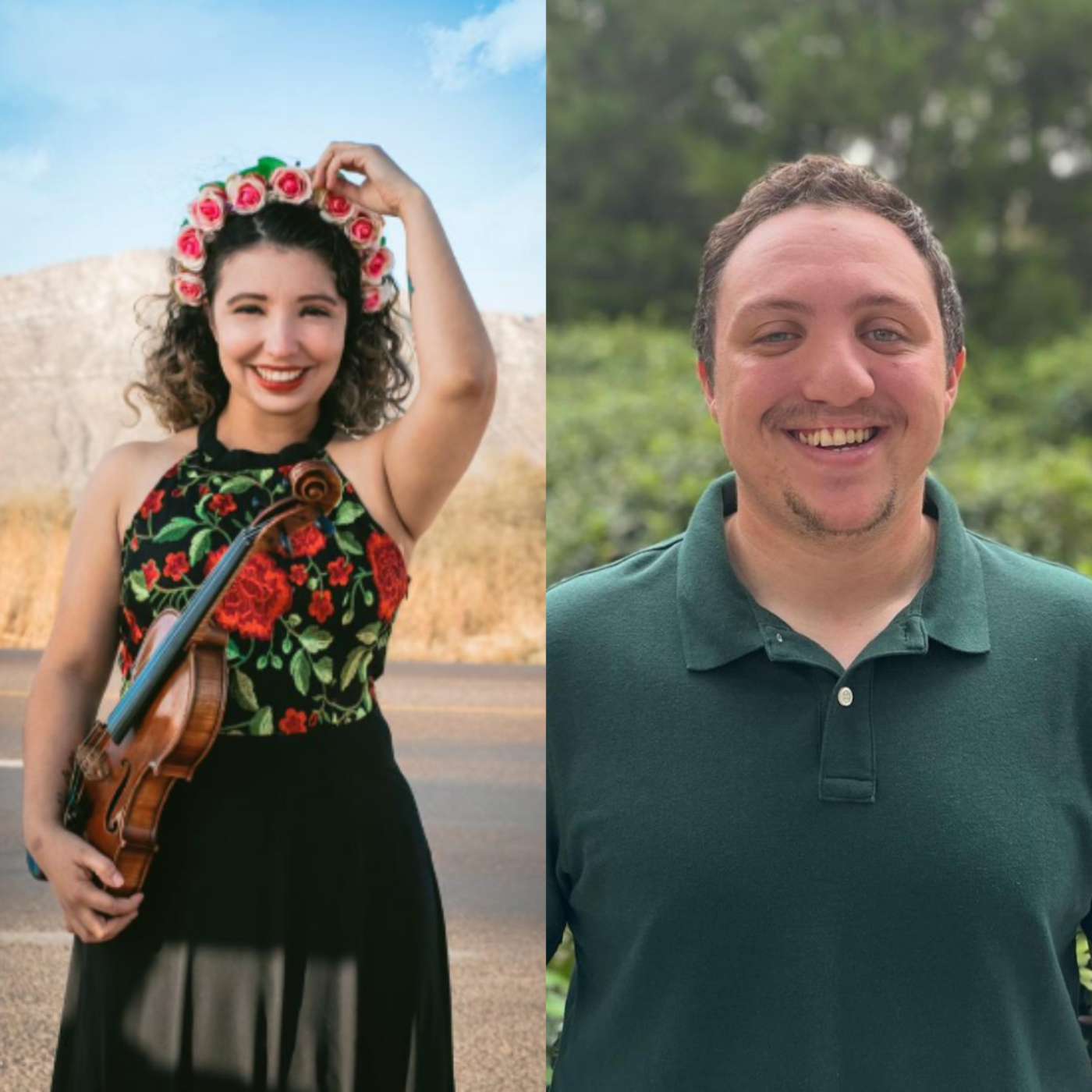
 This episode of the Theorist Composer Collaboration podcast is the first TCC Roundtable, with today’s subject being The Classical Canon. Music theorist Aaron D’Zurilla discusses with performer/educator Dr. Pamela Mireles and music theorist Albert Wheeler to define the canon, who is in it, who is excluded, issues with pedagogy, structural change with tangible solutions to these issues.
Dr. Pamela Mireles contact: https://www.instagram.com/pamina_miza/
Albert Wheeler contact: https://www.instagram.com/wheeler_albert_/
Donate to the TCC:
https://buymeacoffee.com/tccollaboration
A full episode transcript is also available on our host website on the corresponding episode page a few weeks after the initial upload at https://www.tccollaboration.com/
Make sure to follow the TCC social media and hosting accounts on:
Facebook: https://www.facebook.com/profile.php?id=61557900086297
Instagram: https://www.instagram.com/tc_collaboration/
Website: https://www.tccollaboration.com/
00:00:00,000 --> 00:00:05,600
Welcome to the Theorist-Composer Collaboration, a podcast series highlighting modern composers
2
00:00:05,600 --> 00:00:11,440
and their compositions. My name is Aaron DeZarilla, I'm the host of this podcast and also a graduate
3
00:00:11,440 --> 00:00:17,520
music theory student at Florida State University. Today we have a special episode, the second TCC
4
00:00:17,520 --> 00:00:23,360
roundtable, with today's discussion being on the topic of the classical canon. These roundtables
5
00:00:23,360 --> 00:00:29,360
are occasional breaks from the interview format of the typical TCC episodes, showcasing casual
6
00:00:29,360 --> 00:00:35,200
conversations with various people in and around the music academic industry on the panel. Speaking
7
00:00:35,200 --> 00:00:42,880
of the panel, it's time for introductions and up first is Albert Wheeler. Long Island native Albert
8
00:00:42,880 --> 00:00:48,320
Wheeler is a master's in music theory student at Florida State University. Before arriving in
9
00:00:48,320 --> 00:00:54,320
Tallahassee, he attended the Aaron Copeland School of Music at CUNY Queens College. He received a
10
00:00:54,320 --> 00:00:59,280
bachelor's in music education while competing in track and field for the Knights. His primary
11
00:00:59,280 --> 00:01:04,800
instrument is the violin, allowing him to play in prestigious venues such as Kodak Hall at the
12
00:01:04,800 --> 00:01:10,000
Eastman School of Music and Carnegie Hall in New York. His current research interests include
13
00:01:10,000 --> 00:01:17,680
pedagogy, Greek popular music, and topic theory, which leads me to welcome Albert Wheeler himself
14
00:01:17,680 --> 00:01:22,640
to the podcast. How are you doing, Albert? Great, Aaron. Thank you for having us and good morning,
15
00:01:22,640 --> 00:01:30,160
Pam, as well. Yes, yes, of course. Happy to have you on, another fellow theorist. And for any sharp
16
00:01:30,160 --> 00:01:35,840
listeners, you know that Albert is a peer of mine on a weekly basis. We are both graduate music
17
00:01:35,840 --> 00:01:42,160
theory students at Florida State. And our next panelist, of course, is Dr. Pamela Mireles,
18
00:01:42,160 --> 00:01:47,520
who is a Mexican-American violinist with different talents and strengths in her musical career. She
19
00:01:47,520 --> 00:01:53,920
earned a bachelor's degree in violin performance in the Escuela Superior de Música from the Fine
20
00:01:53,920 --> 00:01:59,760
Arts and Literature National Institute in Mexico City and her master's in violin performance and
21
00:01:59,760 --> 00:02:04,880
her doctorate in musical arts in violin performance with a cognate in entrepreneurship from the
22
00:02:04,880 --> 00:02:10,480
University of Florida. Since her studies in the hometown in Mexico, Dr. Mireles has performed as
23
00:02:10,480 --> 00:02:16,640
a soloist, joined jazz bands, folkloric music ensembles, new music projects, chamber music,
24
00:02:16,640 --> 00:02:22,320
and orchestra performances, both in the classical and pop style. Nowadays, Pamela spends her time
25
00:02:22,320 --> 00:02:27,200
freelancing in several orchestras around North America, teaching violin lessons privately and
26
00:02:27,200 --> 00:02:32,480
in public education, teaching music appreciation online as an adjunct, and translating in-person
27
00:02:32,480 --> 00:02:38,880
lessons and master classes from Spanish to English and vice versa. That leads me to welcome Dr.
28
00:02:38,880 --> 00:02:44,880
Mireles herself to the program. How are you? Hi, Aaron. It's nice to see you. And hi, Albert, too.
29
00:02:44,880 --> 00:02:53,280
Hello. All right. A great group of people. Dr. Mireles, how I know her is that she
30
00:02:54,240 --> 00:02:58,640
was still working on her... Well, she graduated with her doctorate my first year
31
00:02:59,280 --> 00:03:05,120
at University of Florida and she was like the... Well, not even de facto, pretty much the head of
32
00:03:05,120 --> 00:03:15,680
the violin studio aside from the professor. And I have to say, Pam or Dr. Mireles, that I always
33
00:03:15,680 --> 00:03:22,320
found you very scary. A lot of people find me scary and I don't know why because I'm 4'10".
34
00:03:23,600 --> 00:03:31,520
Okay, see... No, no, no, no. See, you might be 4'10". See, I'm 6'1", and you might be 4'10",
35
00:03:31,520 --> 00:03:39,920
but to me, you have always appeared as 6'10". Oh, anyway. So, you know, here we are on the second
36
00:03:39,920 --> 00:03:49,200
TCC roundtable. And today's topic is going to be in and around the classical canon. The classical
37
00:03:49,200 --> 00:03:57,680
canon, a loaded, complicated, but very important phrase for basically any musician, really. So,
38
00:03:57,680 --> 00:04:03,760
the classical canon is something that, for academics, is something that's very commonly
39
00:04:03,760 --> 00:04:08,800
thought of. You know, Albert and I, in many classes over the past year at Florida State,
40
00:04:08,800 --> 00:04:14,960
and I'm sure at CUNY at some point, the idea of the classical canon is often debated. It's
41
00:04:14,960 --> 00:04:24,160
relevancy, the elements within it. And when I say in academia specifically, it might be debated in
42
00:04:24,160 --> 00:04:30,720
other circles. It's not that it's not relevant outside of academia, but it's more so just ever
43
00:04:30,720 --> 00:04:37,600
present outside of it. It may not be debated, but when you say classical music, that's what it is,
44
00:04:37,600 --> 00:04:45,600
nine times out of ten. And so, I first want to start by asking Dr. Morales, we're going to go
45
00:04:45,600 --> 00:04:54,560
with you first. How would it, if let's say a 15-year-old violinist or somebody, you know,
46
00:04:54,560 --> 00:05:01,760
somebody who's not a graduate student in music, would ask you, what is the classical canon?
47
00:05:01,760 --> 00:05:08,240
How would you personally define it? Well, while I was debating this answer
48
00:05:09,120 --> 00:05:15,200
that I'm trying to give, I realized there were two parts of me that had the same answer
49
00:05:15,200 --> 00:05:21,760
within different perspectives. So, my first perspective, of course, because I'm a woman
50
00:05:21,760 --> 00:05:27,840
and I'm Latina and I'm still a young person trying to make it in this world, I cannot help
51
00:05:27,840 --> 00:05:35,840
saying out loud, and perhaps without shame, that perhaps the classical canon is something
52
00:05:35,840 --> 00:05:44,080
we attribute to white dead people, especially men, which is a very honest and crude answer. But then
53
00:05:44,080 --> 00:05:49,840
I just realized it's pointless to just keep with this perspective of what the classical canon is.
54
00:05:49,840 --> 00:05:54,880
So, what I did is I started researching a little bit and I grabbed the things that
55
00:05:54,880 --> 00:06:00,080
take my, like, that took my attention more from these definitions and then we can work around that
56
00:06:00,080 --> 00:06:08,480
why it is white dead men music, right? So, one of the perspectives that I found is that the classical
57
00:06:08,480 --> 00:06:15,040
canon is defined as the greatest, most foundational, and most representative. Those were the three
58
00:06:15,040 --> 00:06:21,600
things that caught my attention, right? The greatest, most foundational, and most representative,
59
00:06:22,080 --> 00:06:27,840
which thinking in a way, that's what we've been performing for so, so many years. And it's
60
00:06:27,840 --> 00:06:33,760
considered great music. It's considered foundational and it's considered representative of one style
61
00:06:33,760 --> 00:06:39,920
of music. Of course, it still links us with the white dead men, unfortunately, in some points of
62
00:06:39,920 --> 00:06:45,760
view. Another thing that I found that caught my attention was that it depends on the tastes and
63
00:06:45,760 --> 00:06:53,120
opinions of the general public, which let's admit it, the most audience we have in the classical
64
00:06:53,120 --> 00:07:01,040
genre, it's white people, right? So, as long as they liked it and as long as they thought it was
65
00:07:01,040 --> 00:07:06,640
popular enough for the time, that will become part of the canon. And I think we can, if we talk a
66
00:07:06,640 --> 00:07:12,480
little bit about music history, we can detect those things that happen. Another thing that also caught
67
00:07:12,480 --> 00:07:17,360
my attention, and I think it's a bit more open, is that it is well-known music, which means that
68
00:07:17,360 --> 00:07:25,200
wherever you can find the Swan Lake anywhere and everyone is going to recognize it. Maybe they do
69
00:07:25,200 --> 00:07:32,000
not know what it is coming from or who Tchaikovsky was, but they all recognize the tune. So, within
70
00:07:32,000 --> 00:07:38,560
these three concepts that I'm giving you, I think I can reshape my definition, which would be what
71
00:07:38,560 --> 00:07:46,160
the audience finds more recognizable and whatever the audience likes the most, which then
72
00:07:46,160 --> 00:07:53,360
pedagogically speaking means that we have taught the audience what we think is the best, and
73
00:07:53,360 --> 00:07:59,520
what we think is the greatest, depending on music history or even in music theory, what we
74
00:07:59,520 --> 00:08:08,640
catalog as great music making or music playing that we are teaching the audience is the greatest of
75
00:08:08,640 --> 00:08:14,640
the greatest, which is a term that I really do not like to put with music. And I tell this to my
76
00:08:14,640 --> 00:08:22,320
music appreciation students, there's no such thing as the greatest music. It's just great because
77
00:08:22,320 --> 00:08:28,560
it's music and all music is great. There's nothing greater than, and once they understand that, we
78
00:08:28,560 --> 00:08:34,640
can enjoy music differently, which opens maybe the gap between what is a classical canon and what
79
00:08:34,640 --> 00:08:39,280
isn't, at least for the point of view of the audience. I think I'm rambling a lot, so please
80
00:08:39,280 --> 00:08:40,080
stop me.
81
00:08:40,080 --> 00:08:45,680
No, no, no, no, no, no. Not rambling a lot. I like how you laid out your definition or your argument
82
00:08:45,680 --> 00:08:53,200
there. And can you restate those three points that you said, the three words that helped craft your
83
00:08:53,200 --> 00:08:53,840
definition?
84
00:08:53,840 --> 00:08:58,480
Yeah. I mean, greatest, foundational, and representative.
85
00:08:58,480 --> 00:09:02,320
Greatest, foundational, representative. I like that.
86
00:09:02,320 --> 00:09:06,480
Maybe we can choose great instead of greatest because of what I just said. Just musical is
87
00:09:06,480 --> 00:09:11,440
great, but then what's great for the audience and what's great for us as performers and composers,
88
00:09:11,440 --> 00:09:12,000
right?
89
00:09:12,000 --> 00:09:17,520
Yeah. And as you said, familiarity with the audience or what the audience expects, then you
90
00:09:18,240 --> 00:09:23,520
ask generationally why are they expecting it and so on. You get into that. Well, thank you for that.
91
00:09:24,400 --> 00:09:29,680
Very good. And so Albert, I'm going to throw it around to you, not to give you the second
92
00:09:30,960 --> 00:09:40,400
helping you have to, not totally repeat, but how would you, to a student, I don't know, to someone
93
00:09:40,400 --> 00:09:46,320
who's not a hundred percent familiar with it, explain your definition of the classical canon.
94
00:09:47,200 --> 00:09:52,160
Sure. So, especially because you were talking about high school, maybe student who I'm talking
95
00:09:52,160 --> 00:09:57,600
to a 14, 15 year old. I always go from a scaffolding kind of standpoint whenever I give a
96
00:09:57,600 --> 00:10:02,880
definition. So in this case, if I was talking about a canon itself, I would talk about classics first,
97
00:10:02,880 --> 00:10:10,080
not just the canon. So classics as in books and a canon, when I think of a canon is a list of books
98
00:10:10,080 --> 00:10:14,560
that have became essential to impact an entire field. We especially see that too, as we're
99
00:10:14,560 --> 00:10:17,840
starting to read more things, every single class we've ever been a part of, we start with a
100
00:10:17,840 --> 00:10:23,120
historization of what happened with that field and how we've gotten to where we are now. So when I
101
00:10:23,120 --> 00:10:27,120
think of a canon, and I would actually start with something like, let's talk about Homer, let's talk
102
00:10:27,120 --> 00:10:32,320
about Dante. If you're talking about maybe Marxism or Durkheim, right? Sociologists and stuff like
103
00:10:32,320 --> 00:10:38,000
that, that they're also classic composers. Well, I guess not composers, but they're part of the
104
00:10:38,000 --> 00:10:43,440
classic canon also, just a different type of classic canon. So in classical music itself,
105
00:10:43,440 --> 00:10:50,240
a canon is just essentially that group of people, not as authors, but more just composers,
106
00:10:50,240 --> 00:10:54,720
because composing is a type of authorship. And through time, their compositions have just become
107
00:10:54,720 --> 00:11:00,880
a standard of what it means to be a musician. That's the point we try to get to as a musician
108
00:11:00,880 --> 00:11:06,720
is to enter that canon as an extension, right? Because we already know what's there, hopefully
109
00:11:06,720 --> 00:11:11,280
we get there. Now, I thought it was very interesting. You brought up my days at Queens and how much
110
00:11:11,280 --> 00:11:15,680
debating we might've done there. I can't wait to talk about that because I was part of the
111
00:11:15,680 --> 00:11:22,480
committee that's starting to expand, refine, and change listening exams that we have there. And
112
00:11:22,480 --> 00:11:30,960
what are we considering part of our essential canon itself? Yeah, sure. I don't think, maybe
113
00:11:30,960 --> 00:11:35,040
you've brought it up in some of the classes that we've had before, but I don't think I've ever heard
114
00:11:35,040 --> 00:11:42,960
it be related to the literature canon. I think that that's a really good comparison to do. Maybe
115
00:11:42,960 --> 00:11:50,080
some of the same more problematic historical reasons, but it is a good framing to understand
116
00:11:50,080 --> 00:11:56,400
why it's important, or like why it's lasted for so long and the importance of the music,
117
00:11:56,400 --> 00:12:00,560
importance of the literature. So I really like that. Especially because it's around the same
118
00:12:00,560 --> 00:12:08,800
timeframe too, maybe. If we're talking about early 16th century music, that should be part of our
119
00:12:08,800 --> 00:12:13,440
early canon of teaching stuff to students. And we're talking about Homer and we're starting to
120
00:12:13,440 --> 00:12:17,600
get to Durkheim, we're trying to get to Marxism and stuff like that. At the end of the day,
121
00:12:17,600 --> 00:12:20,880
they're all around the same time period too, right? The rebirth, the Renaissance, everything
122
00:12:20,880 --> 00:12:25,040
we can think of. So that's why I probably haven't brought it up in class, but that's because
123
00:12:25,040 --> 00:12:30,560
we're in a music specific setting of higher education students and stuff like that. So
124
00:12:30,560 --> 00:12:35,520
hopefully we kind of see that already, but yeah, that's where I would start if it was a student.
125
00:12:36,400 --> 00:12:43,120
Yeah, I like that. Personally, I've started... No, not for any particular... I like to understand
126
00:12:43,120 --> 00:12:48,400
composers as the people, like who they were individually. And it's interesting reading
127
00:12:48,400 --> 00:12:55,360
composer bios like books or biographies. Sometimes you forget that they were real people who were
128
00:12:55,360 --> 00:13:04,560
alive at certain events and they knew each other. I just learned that Stravinsky was taught under
129
00:13:04,560 --> 00:13:13,760
Rimsky-Korsakov. I had no idea. I just see them as figureheads in history, which is part of the
130
00:13:13,760 --> 00:13:22,000
problem with the historization, not seeing them as real people almost. Well, so both of you have
131
00:13:22,000 --> 00:13:30,560
already done this quite a bit, but let's get into defining the canon. So we've gotten around what
132
00:13:30,560 --> 00:13:40,000
the idea of it is. It's a systematic categorization of some of the most recognizable, well-researched
133
00:13:40,000 --> 00:13:48,320
and well-performed music throughout a modern history, essentially. I'm sure if I wrote down
134
00:13:48,320 --> 00:13:53,600
what I just said, I could edit that to make it something better because this is such a touchy,
135
00:13:53,600 --> 00:14:01,280
multifaceted thing, but let's go with that for right now. So defining the canon. And what I mean
136
00:14:01,280 --> 00:14:08,480
by that is let's speak literally what's in the canon. And I'm going to leave this open. Anyone
137
00:14:08,480 --> 00:14:16,080
can go now. It's going to depend on the ensemble, I believe. Let me just do it. We're all violinists.
138
00:14:16,080 --> 00:14:20,320
What would you call a violin classical canon? I mean-
139
00:14:20,320 --> 00:14:22,320
Well, that's easy. Well, for us-
140
00:14:22,320 --> 00:14:27,680
Exactly. Well, for us it's easy, right? All the Mozart concertos, Beethoven, Brahms, Tchaikovsky,
141
00:14:27,680 --> 00:14:39,120
Bruch, Sibelius, the violin sonnet as well, Beethoven, Mozart. Then for orchestra, Beethoven's symphonies, Truman's symphonies,
142
00:14:39,120 --> 00:14:44,560
Sibelius's symphonies, well, not all of Sibelius's. But it's going to depend on the instrumentation.
143
00:14:44,560 --> 00:14:50,880
It's going to depend on the ensemble. I think in here maybe it would be more beneficial to talk
144
00:14:50,880 --> 00:14:56,160
about which composers are part of the canon instead of which music is part of the canon. I don't know
145
00:14:56,160 --> 00:15:03,280
if that makes more sense to you. Yeah, go for it. I definitely agree with that. Not so much ensemble-wise,
146
00:15:03,280 --> 00:15:08,320
but yes, I think that word is great. I actually wrote down the word location itself as my
147
00:15:08,320 --> 00:15:14,880
descriptor of it. That is totally true. I definitely, I see every class I've been in, I mean, everyone knows
148
00:15:14,880 --> 00:15:18,880
I'm the token New York student now, right? Because we're in Florida and I'm from New York. So it's,
149
00:15:19,760 --> 00:15:24,960
I have a different viewpoint for a lot of things because just going down to the politics of my
150
00:15:24,960 --> 00:15:32,480
state compared to Florida, it's just a completely different thing. So in terms of canon, New York
151
00:15:32,480 --> 00:15:37,440
is one of the few places that's definitely, it has both, it's expanded it, but also has restricted
152
00:15:37,440 --> 00:15:43,040
it more than anything. So it depends what time of year it is. Is it Christmas time? Very set canon.
153
00:15:43,040 --> 00:15:49,440
Is it a random February? Now it's expanded. So location is definitely my big word. If someone
154
00:15:49,440 --> 00:15:53,200
had to ask me what the canon was, I would ask, where are you from? If they tell me they're from
155
00:15:53,200 --> 00:15:57,200
California, I would say, well, it's movie music. And that's what I would say is their canon and
156
00:15:57,200 --> 00:16:04,800
then move from there. Right. Let me zero it in a little bit then because that's a good point.
157
00:16:04,800 --> 00:16:11,520
That's a good point. It depends on the set because let's say you are an older couple who has a
158
00:16:11,520 --> 00:16:20,800
subscription to a specific performance hall, you know, and you go to every single concert.
159
00:16:20,800 --> 00:16:27,920
If it's around Christmas time, you're expecting, well, Christmas music or so on. But let's say
160
00:16:28,800 --> 00:16:37,680
a prototypical college level symphonic orchestra, just let's say the Chicago conservatory.
161
00:16:38,640 --> 00:16:45,760
I don't know, CUNY maybe Eastman, Florida State even university. Well, university, Dr. Liu has
162
00:16:45,760 --> 00:16:51,840
been doing a bit of work expanding the works that we can talk about that later because it's part of
163
00:16:51,840 --> 00:17:00,560
why the canon is the canon. Yes. Yes. But so the component, you know, I really like the idea of
164
00:17:00,560 --> 00:17:07,280
bringing up the the name or framing it around the instrument because that is very true. Sometimes
165
00:17:07,280 --> 00:17:13,120
I forget when talking to other people, Albert, you can probably relate this because there's very
166
00:17:13,120 --> 00:17:20,160
few string players who are in our program that their canon is very different. If there's any
167
00:17:20,720 --> 00:17:27,360
horn players, their canons much shorter. Percussionists, especially, it's very short.
168
00:17:28,560 --> 00:17:36,000
Saxophonists, some of their canon is considered, compared to our canon is like saxophone material
169
00:17:36,000 --> 00:17:44,720
is wild and crazy compared to ours. So I would, okay, tell me if you guys disagree with this.
170
00:17:44,720 --> 00:17:52,800
I would argue that in music history and music theory, instrumental pedagogy, just the way that
171
00:17:53,600 --> 00:18:01,920
let's say small c classical music is analyzed, the string canon or keyboard canon, and I say
172
00:18:01,920 --> 00:18:08,720
keyboard because you got organ, harp, not harp, organ, harpsichord, all that. That is most dominant.
173
00:18:09,920 --> 00:18:16,640
Oh, yeah. I think it's also because our instruments are older than most woodwinds and brass.
174
00:18:18,480 --> 00:18:23,680
That's definitely part of it, I think. I mean, again, so I have a twin brother. I know Pam doesn't
175
00:18:23,680 --> 00:18:28,560
know me personally yet. So I have a twin brother who also happens to be a musician, has a master's
176
00:18:28,560 --> 00:18:32,560
in music, a bachelor's, everything. He's a trumpet player. And we actually talk about this all the
177
00:18:32,560 --> 00:18:37,600
time where it's like, he's like, I'm like, yeah, your big pieces. It's like the Hummel Trumpet
178
00:18:37,600 --> 00:18:41,920
Concerto, the Haydn Trumpet Concerto. And then he's like, yeah, that's about it. So when he does
179
00:18:41,920 --> 00:18:46,880
trumpet competitions now, he actually comes to me next, are there any pieces you would recommend
180
00:18:46,880 --> 00:18:51,600
that I arrange or play that's manageable? And nowadays, like Tchaikovsky's Violin Concerto is
181
00:18:51,600 --> 00:18:55,840
starting to be played on a trumpet and expand a little bit. He actually just played Mozart's
182
00:18:55,840 --> 00:19:01,520
Orchid Concerto on a flugelhorn, right? Something like that. Your brother is a lot nicer than mine.
183
00:19:01,520 --> 00:19:06,880
Mine is also a trumpet player. He's a really good trumpet player. He did not ask. He just would grab
184
00:19:06,880 --> 00:19:11,440
my concertos on my backs and side-breath them. And they'd be like, oh, it sounds better in the
185
00:19:11,440 --> 00:19:17,280
trumpet. And I'm like, whatever. I don't know about that. But yeah, that's essentially what it is.
186
00:19:17,280 --> 00:19:23,920
Well, I mean, I gotta say, he did play them very well. But that's the exact point that, as string
187
00:19:23,920 --> 00:19:29,120
players especially, then it turns into not just our solo rep, it turns into our duo reps and our
188
00:19:29,120 --> 00:19:34,400
trio reps and our quartet reps. And next thing you know, he's asking me, oh, do you know of any
189
00:19:34,960 --> 00:19:40,320
random quintet pieces that I can play? I'm like, I mean, if you want to play Schubert's Quintet in C,
190
00:19:40,320 --> 00:19:44,720
that's part of our canon, right? We're using the word canon. And he's just like, I've never even
191
00:19:44,720 --> 00:19:49,120
heard of this piece before, even though it's in the classical canon, but I'm a string player. So
192
00:19:49,120 --> 00:19:53,680
it's a little bit different. So it's always an interesting opportunity to talk to my brother
193
00:19:53,680 --> 00:19:58,560
when I can, because we are, you know, the same exact person living completely different musical
194
00:19:58,560 --> 00:20:06,080
lives. So sure, sure. Some great perspectives. I think often in casual conversations, typically
195
00:20:06,080 --> 00:20:13,520
people don't use the word canon, but I think of a more easily colloquial way to say it is repertoire.
196
00:20:14,080 --> 00:20:18,640
Yeah, that is our, you know, what's your my repertoire is really recent. My repertoire
197
00:20:18,640 --> 00:20:26,000
goes back since we've been studying music. So yeah. And so, okay, let's not dance around too
198
00:20:26,000 --> 00:20:33,040
much longer. Let's define who is in the canon. As Pam has said, Dr. Morales has said, it is
199
00:20:33,680 --> 00:20:43,280
predominantly white men who are dead. The dead part makes sense. They're quite old. Well,
200
00:20:43,280 --> 00:20:52,160
I'm going to add on European. So it's predominantly old dead white, mostly Eastern European or Western
201
00:20:52,160 --> 00:20:57,920
European. Sorry, not mostly Eastern European. Eastern European only became quite canonized once
202
00:20:57,920 --> 00:21:03,360
the romantic era came around, maybe late classical. And from there it's included a lot more of the
203
00:21:03,360 --> 00:21:09,200
Eastern European, Russian and Slavic traditions. But that is predominantly what we're talking about
204
00:21:09,200 --> 00:21:15,840
with some exceptions. Would anyone argue against that? No, I think we are trying very well. And
205
00:21:15,840 --> 00:21:20,960
you're also very, very well defining what are the correct characteristics. Because I think that's
206
00:21:20,960 --> 00:21:25,680
why I didn't want to use the term white dead men, because I know it was broader than that.
207
00:21:26,160 --> 00:21:36,320
Yes. It's just, it's very specific. I like that. Yeah. And so that is the canon. Now, okay, why is
208
00:21:36,320 --> 00:21:47,120
that the million dollar question? There's some obvious things such as racism and classism
209
00:21:47,120 --> 00:21:55,920
historically, whether that's at the time of the compositions, or historians, theorists, musicologists,
210
00:21:55,920 --> 00:22:02,400
whatever you want to define people doing archival and theoretical work, looking back on it and
211
00:22:02,400 --> 00:22:09,360
judging it, disregarding people because their race, and also because their gender. There's also a class
212
00:22:09,360 --> 00:22:17,600
element accessibility to the education for composition, being able to have your things
213
00:22:17,600 --> 00:22:23,920
performed, and so on. So that's some basic tenants. That's what's brought up most often.
214
00:22:24,640 --> 00:22:30,640
Do you guys want to expand on any of those elements a little bit? I am, I always think of the canon as
215
00:22:30,640 --> 00:22:36,160
a two school of thought place. There's always two branches. And we already touched on European.
216
00:22:36,160 --> 00:22:41,200
That's one of the schools for sure. The other one would come down to, I would put in quotes
217
00:22:41,200 --> 00:22:44,960
conductor, because I think educators are better way to put that, which I know we'll talk about,
218
00:22:44,960 --> 00:22:51,120
I'm sure at some point. But as in your conductor, your educators, the one who gives you the
219
00:22:51,120 --> 00:22:55,280
knowledge as a student, and you soak up every bit of knowledge. I always wanted to learn from my
220
00:22:55,280 --> 00:23:00,080
teachers. I'm continuing to go back to school 19 years later, and soon, hopefully 23 years later
221
00:23:00,080 --> 00:23:06,640
with a PhD, right? So there's always this hunger to learn. And what has become part of the canon is
222
00:23:06,640 --> 00:23:11,120
whatever information those who already have a higher degree than me choose to give to me,
223
00:23:11,120 --> 00:23:16,640
and then I just accept it as a canon. And then nowadays, we have technology, so you can do a
224
00:23:16,640 --> 00:23:24,320
little bit more research, but it doesn't help when top 100 songs to ever come out of the classical
225
00:23:24,320 --> 00:23:29,200
music, and then it's every piece that we ever expected to be from, there's never a curve ball
226
00:23:29,200 --> 00:23:34,560
on there. But in terms of conductors, I always think back to Leonard Bernstein, where Mahler was
227
00:23:34,560 --> 00:23:39,680
not a part of our canon at all until Leonard Bernstein decided to do two complete cycles
228
00:23:39,680 --> 00:23:46,000
when he was at Juilliard, right? So it really comes down to your teacher. Your teacher has all those
229
00:23:46,000 --> 00:23:51,280
choices of what's in the canon, and that's your choice to accept that, or it's your choice to
230
00:23:51,280 --> 00:23:57,920
change it and become more progressive as time goes on. Yeah, I agree with that. And in the audience
231
00:23:57,920 --> 00:24:04,240
point of view, I think it depends on what they are consuming, and that depends entirely on the
232
00:24:04,240 --> 00:24:11,520
orchestras and the ensembles that are programming all this music. And if the orchestra wants to play
233
00:24:12,880 --> 00:24:17,920
all Beethoven's symphonies in one season, then that's what the audience is going to hear. Therefore,
234
00:24:18,480 --> 00:24:26,000
people is going to acknowledge Beethoven as a composer worth listening to, and therefore part
235
00:24:26,000 --> 00:24:34,240
of the canon, right? It's like they will recognize Beethoven anywhere. They will know that Beethoven
236
00:24:34,240 --> 00:24:40,240
is good music and they'll recognize it. So for them, it's going to become part of this emotional
237
00:24:40,240 --> 00:24:44,800
gap that we have with music, not that, sorry, this emotional connection we have with music,
238
00:24:44,800 --> 00:24:52,880
right? So I also wonder if, and it could happen as a student, right? I remember my first time listening
239
00:24:52,880 --> 00:24:56,800
to Tchaikovsky. I can't remember right now what was it, but I remember falling in love completely
240
00:24:56,800 --> 00:25:01,760
with it just because I liked the music. I didn't know who he was. I didn't know he was Russian. I
241
00:25:01,760 --> 00:25:07,440
didn't know he was dead and white. I just heard his music and I fell in love with it. And that's
242
00:25:07,440 --> 00:25:13,920
what also we have to pay attention because honestly, we're here because we are feeling things,
243
00:25:13,920 --> 00:25:21,600
aren't we? So if we just like how the music makes us feel, we're going to make it part of the canon
244
00:25:21,600 --> 00:25:28,480
one way or another. That makes a lot of sense, especially if we're talking about high schoolers
245
00:25:28,480 --> 00:25:32,560
that are feeling everything. If the music just makes them feel everything, they're going to love
246
00:25:32,560 --> 00:25:40,320
it no matter what. Fair enough. A very good point. So I'm kind of parsing two elements right now.
247
00:25:40,320 --> 00:25:50,320
One is the effects of pedagogy, whether that's at the instrumental or ensemble level. And then the
248
00:25:50,320 --> 00:25:57,200
other is the reception or expectations of the public. And so let's stick with pedagogy for
249
00:25:57,200 --> 00:26:07,680
right now. Let's stick with that. I guess what I ask is, is it a problem that although there has
250
00:26:07,680 --> 00:26:12,320
been movement over the past few years and reconciliations of trying to expand the canon
251
00:26:12,320 --> 00:26:19,680
and make it more diverse and wide open in terms of the representation of the composers and the
252
00:26:19,680 --> 00:26:27,520
music within it, is it an issue to be? Well, I should say I personally think yes, it is an issue
253
00:26:27,520 --> 00:26:38,640
that in pedagogical terms, there is a firmness over time of almost a movability in accepting larger
254
00:26:38,640 --> 00:26:44,880
swaths of music. And in my experience, both of you, of course, can speak to your own.
255
00:26:44,880 --> 00:26:51,680
It's not even just based on gender and race. It's also just not moving without outside the
256
00:26:51,680 --> 00:26:58,720
canon. For example, there was a violinist at University of Florida who went to our professor
257
00:26:59,280 --> 00:27:09,280
with a piece by Amy Beach, someone who is alive well within what the canon is, a female composer.
258
00:27:09,280 --> 00:27:15,200
There are people who are considered within the canon who were alive after and right at this time
259
00:27:15,200 --> 00:27:21,840
is her, but she is not typically, I mean, maybe for us who more regularly engage with music that's a
260
00:27:21,840 --> 00:27:27,440
little bit outside the veil, but for the general public or general performers or educators, Amy
261
00:27:27,440 --> 00:27:33,760
Beach would not be. And when brought this piece, like, oh, I would like to learn this or perform
262
00:27:33,760 --> 00:27:42,880
this, she was told no, because it's outside of the structured, canon based curriculum, even if it is
263
00:27:42,880 --> 00:27:50,160
still within like the time period, the style and so on. So my question, I personally think that is a
264
00:27:50,160 --> 00:27:55,120
strong problem. So I gave an example of a female composer, but it's more to say that it's not like
265
00:27:55,120 --> 00:28:02,400
the style of Amy Beach is some wacky crazy thing. It's just it's excluded. Historically, on the
266
00:28:02,400 --> 00:28:09,600
basis of gender, but even now, just because it's not part of the zeitgeist of instrumental pedagogy,
267
00:28:09,600 --> 00:28:16,640
it's not seen as something on the level in terms of educational benefit. So what is your guys thoughts
268
00:28:16,640 --> 00:28:23,360
about that? Well, I personally think that if you're trying to teach your students music, you're doing
269
00:28:23,360 --> 00:28:28,160
the wrong thing by saying, no, you cannot play this because it's out of the canon. I don't think
270
00:28:28,160 --> 00:28:33,440
that's very important in the pedagogy part. If you're trying to help your students learn,
271
00:28:34,160 --> 00:28:39,440
it doesn't have to be everything in the canon. We have plenty of time to learn that. So we might as
272
00:28:39,440 --> 00:28:44,880
well learn new music or different music, or not even different music, just music that is out of
273
00:28:44,880 --> 00:28:53,040
the canon. Especially if it doesn't break any like rules of style, period, whatever, ensemble,
274
00:28:53,040 --> 00:29:00,160
whatever it could be the other problem that may arise. Well, before you jump in, Albert, I'm gonna
275
00:29:00,720 --> 00:29:07,760
play like mild devil's advocate, or I'm gonna throw something back. So for college, I think
276
00:29:07,760 --> 00:29:14,320
that makes perfect sense. And it wouldn't be too insanely difficult to do that. If you have a studio
277
00:29:14,320 --> 00:29:21,200
to introduce music, such as like, say, Amy Beach, or, you know, this sounds weird, but for violinists,
278
00:29:21,200 --> 00:29:27,360
this is great, you know, having Vaughn Williams, which that's not insane. But for a solo violin
279
00:29:27,360 --> 00:29:35,200
rep, that's not typical compared to others. But let's say a high school student, or middle
280
00:29:35,200 --> 00:29:39,120
school student might be going a little too early, depending on their level. But what about there?
281
00:29:40,160 --> 00:29:48,000
How would you feel as a teacher, if you had the option between, I don't know, a Mozart concerto,
282
00:29:48,000 --> 00:29:55,520
teaching them a Mozart concerto versus something else that is of similar difficulty and technical
283
00:29:55,520 --> 00:30:01,920
demand, but is not part of the zeitgeist? I was thinking of one of the bullet points. All right,
284
00:30:01,920 --> 00:30:11,440
so I'm just gonna talk about it right now. So the most common answer would be no, because we think,
285
00:30:11,440 --> 00:30:19,840
or we are taught, that we should follow a list of repertoire of what we can do before what,
286
00:30:19,840 --> 00:30:27,360
or after what. And yeah, if a high schooler arrived and asked me to do something out of the
287
00:30:27,360 --> 00:30:33,520
canon, I would probably convince them to do something inside of the canon. But now I'm
288
00:30:33,520 --> 00:30:41,760
questioning myself, why would I do that? Well, not to put words in your own mouth, but my, if I was
289
00:30:41,760 --> 00:30:47,760
in that position, my internal reasoning would be, well, they probably want to use this as audition
290
00:30:47,760 --> 00:30:56,880
material. You know, they want to be successful within, like, violin. They want, like, to have a
291
00:30:56,880 --> 00:31:04,160
Mozart concerto under your belt, just ready, is, I would argue, almost essential if you want to be a
292
00:31:04,160 --> 00:31:11,200
successful performer or apply to colleges. And so, because I don't want Albert sitting on the benches
293
00:31:11,200 --> 00:31:15,760
too long, I'm gonna throw it over to you. What are your thoughts on all this?
294
00:31:15,760 --> 00:31:27,600
Maybe I like sitting on the bench. No, okay. No, so, yeah, I agree. I mean, it depends what your
295
00:31:27,600 --> 00:31:32,800
student's end goal is. I definitely think that's a big part of it, because there's plenty of people
296
00:31:32,800 --> 00:31:37,120
who are going to only play their instrument through high school and call it a day. So, if they're
297
00:31:37,120 --> 00:31:41,040
gonna only play through high school, I would say, play whatever makes you happy, because you're only
298
00:31:41,040 --> 00:31:44,880
gonna have four more years to play your instrument anyway, from that perspective, as in you don't
299
00:31:44,880 --> 00:31:48,720
think they're gonna keep going, or they even choose they're not gonna keep going, no matter how much
300
00:31:48,720 --> 00:31:52,640
you push them to do it. I was even one of those people, I did not think I would go into music
301
00:31:52,640 --> 00:31:57,920
after high school. I was so set on sports. I was so set on everything else that I could have done.
302
00:31:57,920 --> 00:32:02,000
And then, within three months of college, I was like, I need to keep doing this. I'm gonna keep
303
00:32:02,000 --> 00:32:08,080
doing it. So, I definitely think it, you know, if you're doing it for just a showcase of playing
304
00:32:08,080 --> 00:32:13,200
your instrument, you like a piece, play it. It's gonna make you happy. By 100% agree, if I ever
305
00:32:13,200 --> 00:32:17,920
showed up to an audition, I didn't have Schumann's scherzo from his second symphony under my fingers
306
00:32:17,920 --> 00:32:23,760
as a violinist, I should not be auditioning. That's something that needs to be under my fingers.
307
00:32:23,760 --> 00:32:30,080
So, yeah, it's a very loaded question. Now, in terms of, we were talking about Amy Beach a little
308
00:32:30,080 --> 00:32:38,480
bit. She's 100% in our canon. So, I think that's a not wise judgment to say, oh, you can't, especially
309
00:32:38,480 --> 00:32:42,960
if I'm thinking of the one piece off the top of my head, or the romance for violin, if I was told I
310
00:32:42,960 --> 00:32:47,600
can't play the romance for violin, I'd be like suing the school. And that's the action I would
311
00:32:47,600 --> 00:32:54,640
take because it's 100% within the canon. Under representation, you know, you're supposed to
312
00:32:54,640 --> 00:32:59,680
try to expand as much as you can. But it's not like I'm taking a film score and trying to play
313
00:32:59,680 --> 00:33:03,280
it as my opening piece, which is slightly different. Not saying it may not, like it's in our
314
00:33:03,280 --> 00:33:10,000
canon, but it's a different concert hall vibe, right? You go to, we're showing Star Wars,
315
00:33:10,000 --> 00:33:15,440
A New Hope here in Tallahassee in, I think a week or two, right? You go to a specific event for
316
00:33:15,440 --> 00:33:20,240
something like that. If I'm performing my senior recital, I'm not going to do anything poppy or
317
00:33:20,240 --> 00:33:26,480
anything like that until maybe an encore to lighten the mood and make it happy. But Amy Beach can be
318
00:33:26,480 --> 00:33:31,360
a very easy opener for 12 minutes and you play a romance, which is part of the topic. And that can
319
00:33:31,360 --> 00:33:35,360
be, you know, a topic theory we can talk about later for music theory pedagogy, right? So,
320
00:33:35,360 --> 00:33:44,080
yeah, it's the winter topic. No, I'm joking. So it's definitely, you know, knowing where the
321
00:33:44,080 --> 00:33:48,160
field is going to, that's the first question that we got asked to his music theorist is where do you
322
00:33:48,160 --> 00:33:53,520
think the field is going? I think if you don't ask that question as a performer to such educator,
323
00:33:53,520 --> 00:33:58,560
that's part of the problem. You need to know where is the field going? What are we trying to
324
00:33:58,560 --> 00:34:04,880
accomplish? And if that's play underrepresented music, then why would you ever say no to Amy Beach?
325
00:34:04,880 --> 00:34:11,040
But if that's, I want to stick with your undergrad degree to be as canonized as possible and you play
326
00:34:11,040 --> 00:34:15,280
your Bach and you play your buton and you play your Sibelius and go in your order that you're
327
00:34:15,280 --> 00:34:19,600
supposed to and then grad school is where you expand. So be it. That's just a conversation you
328
00:34:19,600 --> 00:34:24,800
need to have with your professor itself. That is true. I like that idea actually of like planning
329
00:34:25,440 --> 00:34:31,840
how much you want to learn while in school and how much you want from the canon and how much
330
00:34:31,840 --> 00:34:41,680
you don't want from the canon. So here, you know, here we are arrived at the eternal question of
331
00:34:41,680 --> 00:34:47,520
practicality versus desire because all three of us have said, all three of us are educators in
332
00:34:47,520 --> 00:34:52,000
different ways. You know, Albert, you've taught violin lessons, I've taught violin lessons,
333
00:34:52,000 --> 00:34:58,800
and you've also are teaching aural skills and music theory. I'm teaching songwriting. Dr.
334
00:34:58,800 --> 00:35:06,400
Morales has taught a numerous number of different musical ensembles, solo lessons and classrooms and
335
00:35:06,400 --> 00:35:16,400
so on. So I honestly at the high school level, because you're trying to prepare people for the
336
00:35:16,400 --> 00:35:23,760
wider world, essentially getting ready for them to leave, it would almost even if you're intellectually
337
00:35:23,760 --> 00:35:30,000
trying to have the best intentions, going too far outside the canon might stunt them a little bit in
338
00:35:30,000 --> 00:35:37,120
terms of their auditioning capabilities. That's not their fault. And that's not our fault. That's just
339
00:35:37,120 --> 00:35:42,880
the way that the institutions built over time, I would say arguably for a lot of the reasons of
340
00:35:42,880 --> 00:35:49,280
racial and gender bias over time. And then that gets compounded upon over the decades through
341
00:35:49,280 --> 00:35:54,640
nicer means, but it still has that origin. But at the end of the day, that's the way that it is.
342
00:35:54,640 --> 00:35:59,520
There's not much as educators we can do at that level. Now we get to the college level,
343
00:35:59,520 --> 00:36:08,640
that's a little bit different. So I'm not trying to ask you guys, because I didn't ask you to prepare
344
00:36:08,640 --> 00:36:14,240
this and this would be a big thing. But if you guys had a violin studio, you know, how would you
345
00:36:14,240 --> 00:36:20,960
approach that? Because, for example, Dr. Marialis knows this very well, our weekly diet, at least
346
00:36:20,960 --> 00:36:26,960
for the undergrads at University of Florida, was that we had an etude, I don't think you can argue
347
00:36:26,960 --> 00:36:33,120
against that, of various books, depending on your level. Then we had solo Bach, and then whatever
348
00:36:33,120 --> 00:36:38,880
major piece we're working on. Each week we had those three things. And the beautiful part is that it
349
00:36:38,880 --> 00:36:46,320
could be either a concerto or a sonata or a show of piece. It could be anything. As long as it was
350
00:36:46,320 --> 00:36:52,880
major, I think we have to pay attention to that word major piece of violin repertoire, right?
351
00:36:52,880 --> 00:37:01,040
Yes. And I would argue part of Dr. Lauer's reasonings for that was to prepare us again,
352
00:37:01,040 --> 00:37:06,480
like the high school mindset. What are your guys thoughts once you get to the college level,
353
00:37:06,480 --> 00:37:13,360
if you were in charge of a violin studio? Oh, and when this relates to the canon,
354
00:37:13,360 --> 00:37:18,640
wanting to be more inclusive, but also being practical in equipping your students?
355
00:37:20,960 --> 00:37:25,200
I'm gonna let you talk first, because I have a very strong feeling of being an artist.
356
00:37:25,200 --> 00:37:26,160
Sure, no problem with that.
357
00:37:28,080 --> 00:37:34,640
Of course. So I agree that at Queen's, I did kind of the same as I think, you know, I had my
358
00:37:34,640 --> 00:37:40,400
Duneist Daily Dozen I always started with, and then I moved on to my etudes. And then you always
359
00:37:40,400 --> 00:37:44,640
pick up again, a show piece if you want to put in quotes, anything major. But I think there's
360
00:37:45,200 --> 00:37:52,000
two ways to think about it. Definitely. Do I want to get a job after here? If I don't learn something
361
00:37:52,000 --> 00:37:57,040
like, even if it's just one really big concerto under your fingers, and that's the one that you
362
00:37:57,040 --> 00:38:01,120
get to play for the rest of your life, and you get to own it. I'm thinking like, I don't know,
363
00:38:01,120 --> 00:38:05,360
Ray Chen, if you asked Ray Chen to play two pieces right now, the two I would come up with are
364
00:38:05,360 --> 00:38:09,120
Mendelssohn and Brook. He's known for his Mendelssohn, he's known for his Brook. I'm happy
365
00:38:09,120 --> 00:38:13,280
with both his recordings. I've never heard him, I've heard him live like three times now. I've
366
00:38:13,280 --> 00:38:19,280
never had a bad experience, right? So I think the point of running a studio is finding that one piece
367
00:38:19,280 --> 00:38:24,720
that's if we put in our repertoire canon, you need to have it in your back pocket. Because what
368
00:38:24,720 --> 00:38:30,800
happens if Burl and Phil calls you up and says, we need a substitute, can you play the Brook for me?
369
00:38:30,800 --> 00:38:33,840
They're calling you for a reason, and that's the player Brook, right?
370
00:38:33,840 --> 00:38:36,320
And you're gonna tell them, no, I want to play something else.
371
00:38:36,320 --> 00:38:39,600
Yeah, it's like, no, can we actually play like something by Ligeti? It's like, no,
372
00:38:39,600 --> 00:38:43,360
like you need to play Brook, right? That'd be sick.
373
00:38:43,360 --> 00:38:47,760
Yeah, so I think there's that aspect of it, it's just preparing yourself for the field. If you
374
00:38:47,760 --> 00:38:51,440
don't prepare yourself for the field, you're not going to get hired, and we're trying to make a
375
00:38:51,440 --> 00:38:58,000
living too. Now, I've had open conversations with my own teachers where it's like, hey, I would
376
00:38:58,000 --> 00:39:01,920
really like to play this piece that's not played so much, but it's because I enjoy it. And their
377
00:39:01,920 --> 00:39:07,040
answer to that is, well, if you enjoy it, come back with it prepared, and show to me why you
378
00:39:07,040 --> 00:39:11,440
enjoyed it. It can't just, you know, don't just waste your time. There's always something in
379
00:39:11,440 --> 00:39:15,920
pedagogy, we can always get something out of something, right? What if it's just like, oh,
380
00:39:15,920 --> 00:39:19,040
there's a couple hard shifts in this piece, so we're going to isolate it there. Now you have
381
00:39:19,040 --> 00:39:24,080
those under your fingers, and then it's more like an etude also, right? So it always depends on what
382
00:39:24,080 --> 00:39:28,720
your end goal ultimately is, because I know plenty of musicians whose end goal is to play on Broadway,
383
00:39:28,720 --> 00:39:32,400
and that's a different style of playing, so I'm not going to expect them to play, you know,
384
00:39:32,400 --> 00:39:39,840
Vuitton 4. But if they wanted to, they could, and it's a good tool to have. So that's how,
385
00:39:39,840 --> 00:39:44,080
you know, it really depends what your end goal is. I think you as a student has that choice,
386
00:39:44,080 --> 00:39:49,200
and it's your job with the teacher to guide you, but also respect your choices, because that's,
387
00:39:49,200 --> 00:39:55,680
you are the student. But yeah, you're working with them. So if you need to learn lalo, learn
388
00:39:55,680 --> 00:40:00,400
lalo, that's part of the gig, but it's okay to expand from lalo if that's your choice a little
389
00:40:00,400 --> 00:40:06,560
bit. So essentially a student by student, case by case basis, giving them what they need. I think
390
00:40:06,560 --> 00:40:11,920
that'd be smarter if you're, because how many studios are possibly over 20 students? Usually
391
00:40:11,920 --> 00:40:17,440
you'd have more isolated studios at that point, you'd have more teachers. So that's the whole
392
00:40:17,440 --> 00:40:23,040
point of you picking and choosing who to work with. It's, you know, it's Zach Perlman is very,
393
00:40:23,760 --> 00:40:27,440
he chooses his studio at Juilliard for a reason, right? And they're going to go through his
394
00:40:27,440 --> 00:40:30,960
training for a reason. So it's trusting your teacher. If you don't trust your teacher,
395
00:40:30,960 --> 00:40:34,720
that's why you take a lesson. Trust your teacher who you're going to work with, but also having
396
00:40:34,720 --> 00:40:39,920
that conversation early. Do you mind if we expand the canon if I come here? If your teacher says no,
397
00:40:39,920 --> 00:40:43,280
then that should be your decision to go there or not to go there. It should not just be the
398
00:40:43,280 --> 00:40:49,840
name of the brand, right? Okay, fair enough. That is totally true. Yeah. Okay. Dr. Morales,
399
00:40:49,840 --> 00:40:56,880
I'm ready. We're ready for it. So yeah, no, of course. Well, I mean, I adore my professor. I
400
00:40:56,880 --> 00:41:02,880
love Dr. Lauer. Half of the things or more than half of the things that I do during my private
401
00:41:02,880 --> 00:41:08,240
lessons, I do them because she taught them to me. So all these things are asking this, like, I don't
402
00:41:08,240 --> 00:41:14,480
know why she does this. I don't know why she did that. I know why she did it. She explained it very
403
00:41:14,480 --> 00:41:18,400
carefully. Like not particularly. I'm not saying I know what happened to you and what happened to
404
00:41:18,400 --> 00:41:25,360
your ex. I mean, I did find out, but that was not the point of the lessons. The point of the
405
00:41:25,360 --> 00:41:29,680
lesson was when you have a student that's struggling with this, you go and do that.
406
00:41:30,240 --> 00:41:34,800
And when the repertoire is like that, then you move on to something else instead of going through
407
00:41:34,800 --> 00:41:40,240
this part. Don't do this concerto. Do these concertos instead. And if this happens and then
408
00:41:40,240 --> 00:41:46,640
when the... So we talked a lot and we had to, because that was literally a lesson required by
409
00:41:46,640 --> 00:41:52,400
the DMA program at UF. Like we had to sit and we had to talk and I had to do and she had to correct
410
00:41:52,400 --> 00:41:59,120
my teaching. And I really liked the way of working that she has. The A to the back and the piece,
411
00:41:59,120 --> 00:42:05,280
that is just magnificent. The only thing that I would add, and I would also do it by student basis
412
00:42:05,280 --> 00:42:13,120
or even a semester basis. Like I would like you to play at least one piece that you want to play
413
00:42:13,120 --> 00:42:17,840
that is different from the canon, but that's something that I would do different than her.
414
00:42:18,400 --> 00:42:23,760
I don't know if that makes sense. Especially because I made that a policy on all my recitals.
415
00:42:23,760 --> 00:42:32,160
I did four recitals at UF and I made a thing and she approved it once I sat on top through with her
416
00:42:32,160 --> 00:42:38,480
that I wanted to play a piece by a Mexican composer in each of my recitals. And she was okay
417
00:42:39,200 --> 00:42:45,280
with that, but I had to tell her why it was important to me. Because of course,
418
00:42:45,280 --> 00:42:49,440
this is music she doesn't know. She was like, how am I going to help you if I don't know this music?
419
00:42:49,440 --> 00:42:54,400
It's like you don't just have to help me however you can. I'll take care of the rest. But again,
420
00:42:54,400 --> 00:42:59,680
I was also already a grad student when I did that. If you are on your undergrad, maybe it's going to
421
00:42:59,680 --> 00:43:06,880
be harder unless you prove your professors wrong. Or as Albert said, if your professor just refuses
422
00:43:06,880 --> 00:43:11,520
to let you do the things you want to do, then you just move on to another person. You move on to
423
00:43:11,520 --> 00:43:17,280
another studio. And that is completely valid. And I keep telling students, do not hesitate of saying
424
00:43:17,280 --> 00:43:24,240
this does not work for me. Because it's just going to be worse for everyone. So pedagogically wise,
425
00:43:24,240 --> 00:43:30,320
I think the canon is there for a reason. It's either we made it a canon and we keep it as a canon.
426
00:43:31,040 --> 00:43:37,840
But pedagogically wise, it teaches us so many basic things and foundational things of the violin
427
00:43:37,840 --> 00:43:45,360
playing in general for chamber orchestra soloist. Even for new or baroque music, it's all the basics
428
00:43:45,360 --> 00:43:52,720
in there. And it's up to the professor and the students to broad that canon with the
429
00:43:52,720 --> 00:43:58,240
under representative, the music that we like, the genres we like, the combination with the
430
00:43:58,240 --> 00:44:04,240
electronics with the new music with the baroque style that we barely hear here in the States,
431
00:44:04,240 --> 00:44:09,040
that is up to the individual and their relationship with their professor.
432
00:44:09,040 --> 00:44:20,160
Now, here's a question. So although, see, this is one thing that I try to push back a little bit on
433
00:44:20,160 --> 00:44:27,600
with just the existence of the show, the TCC, is to not make newer or more novel. When I say
434
00:44:27,600 --> 00:44:31,760
novel, it doesn't necessarily need to be in the past 20 years, just novel composition,
435
00:44:31,760 --> 00:44:39,680
not just a fun sideshow. And I'm not saying I'm not, I'm not necessarily disagreeing with either
436
00:44:39,680 --> 00:44:43,520
of you. I also feel like a bit of a pain in the ass asking some of these questions because I feel
437
00:44:43,520 --> 00:44:47,920
like I'm just trying to like stir the pot a little bit, but I'm trying to explore all the angles of
438
00:44:47,920 --> 00:44:56,560
this. But, you know, if you get into a cycle of, and this is less on the angle of practicality and
439
00:44:56,560 --> 00:45:02,880
more ideology, because practicality as a professor or as an educator, especially for younger people,
440
00:45:02,880 --> 00:45:08,000
you're kind of trapped in a circle of you need to do your due diligence of being a mentor and
441
00:45:08,000 --> 00:45:15,040
getting them ready for whatever they're going to do. But nothing is going to change if you are
442
00:45:15,040 --> 00:45:22,880
teaching them the canon. Like, for example, you said that there's nothing better than those
443
00:45:22,880 --> 00:45:30,400
formulas to help prepare you for the symphonic and chamber world, which that makes perfect sense
444
00:45:30,400 --> 00:45:37,920
because you are preparing them for the canon by teaching them the canon. You know, learning
445
00:45:37,920 --> 00:45:45,440
German idioms is of course, you know, through Bach or something else in the early classical period,
446
00:45:45,440 --> 00:45:52,080
of course, is going to prepare you for the deep romantic era. I mean, that just makes sense. And
447
00:45:52,080 --> 00:45:58,160
Russian style playing is a bit different, but it's easily transplanted from that knowledge.
448
00:45:58,640 --> 00:46:04,640
Regionally, they're not super far away, but also just historically, the styles started to meld over
449
00:46:04,640 --> 00:46:10,720
the centuries. There's a reason why, other than just historically, there's not as much coverage.
450
00:46:10,720 --> 00:46:16,880
There's a reason why we don't study Russian music literature earlier than that period, because it
451
00:46:16,880 --> 00:46:23,440
was either not recorded or it is so different from the tonal system that we use. So, although I
452
00:46:23,440 --> 00:46:30,400
understand on a practicality basis that you're saying that the early, that the canon is important
453
00:46:31,120 --> 00:46:36,240
for pedagogical, but the reason why is because, of course, you're not going to teach them something
454
00:46:36,240 --> 00:46:43,680
outside the canon to prepare them to play for the canon. And so, although on a practical level, I
455
00:46:43,680 --> 00:46:50,240
think you're right. I think that there's still an overall problem of exclusivity. And I'm not just
456
00:46:50,240 --> 00:46:56,800
talking on the basis of race and gender. There's plenty of amazing and fine... Like for example,
457
00:46:57,600 --> 00:47:03,760
two composers that are very famous for... And Albert, I'm going to throw this over to you once
458
00:47:03,760 --> 00:47:10,560
I'm done giving this little monologue. Two composers who are incredibly famous for how they
459
00:47:10,560 --> 00:47:18,320
broke the tonal system. They're both white men, John Cage and Schoenberg. They're both very famous
460
00:47:18,320 --> 00:47:26,800
for how they broke down tonality in their own ways, right? But Schoenberg also, I think rightfully
461
00:47:26,800 --> 00:47:30,960
so, because it's just beautiful music. Albert, you're actually the one who cued me into this,
462
00:47:30,960 --> 00:47:39,120
has some amazing early tonal works, just absolutely breathtakingly beautiful tonal works. And so,
463
00:47:39,120 --> 00:47:47,440
Schoenberg is such a monolith in the canon and honestly just in the history of music.
464
00:47:48,720 --> 00:47:55,920
But how come we don't look at John Cage's earlier tonal music? Maybe you could argue it's not as
465
00:47:55,920 --> 00:48:02,960
significant on a subjective level, but I'm mildly familiar with John Cage's tonal music.
466
00:48:02,960 --> 00:48:09,760
And I would argue it's because he's further on in the time period. It's not as old, it's not as
467
00:48:09,760 --> 00:48:17,600
historicized, and it's not as made into a legend like Schoenberg is. Because some of my favorite
468
00:48:17,600 --> 00:48:24,560
piano works just for me to personally play, like in a landscape, are early John Cage tonal works.
469
00:48:25,280 --> 00:48:32,080
So removing the elements of bias with race and gender, which is difficult to do when talking
470
00:48:32,080 --> 00:48:39,600
about the canon, but why is it that even then, more modern composition is just not in the
471
00:48:39,600 --> 00:48:44,800
repertoire? And I'm not talking about pedagogically necessarily anymore, just in general.
472
00:48:45,840 --> 00:48:47,360
Albert, I'm going to throw this to you.
473
00:48:48,240 --> 00:48:54,000
Sure. So I guess this is like conversation of is the canon the composer or the composition itself?
474
00:48:54,000 --> 00:48:58,880
That's exactly where you're coming to. And I think that's such a valid point that, you know,
475
00:48:58,880 --> 00:49:04,560
we're already, the problem with the canon is that we're always arguing who's in it itself.
476
00:49:04,560 --> 00:49:10,240
And then the question comes once you're in it, how did you come in there? Because we were talking,
477
00:49:10,240 --> 00:49:14,560
you were talking about some of your Mexican background too, like first name that always
478
00:49:14,560 --> 00:49:19,200
comes to mind for me is Carlos Chavez, who was a Guggenheim winner, and he has a symphony number
479
00:49:19,200 --> 00:49:25,600
two, and it's using all the elements. And, you know, but it's also very Coplinian. And, you know,
480
00:49:25,600 --> 00:49:30,400
it can very easily be confused with Aaron Coplin, because that's the tonal language we know, and
481
00:49:30,400 --> 00:49:34,240
they were really good friends, you know, I can go on forever in ten, it's like that, right? So,
482
00:49:35,280 --> 00:49:40,800
I think it really does. Yeah, I mean, it's a good point. It's maybe is there a book on
483
00:49:40,800 --> 00:49:45,600
Cage's tonal music? It starts there. Maybe that's the, we have to start off, I know Schoenberg,
484
00:49:45,600 --> 00:49:50,560
there's very few on his tonal music too. That's just a rabbit hole on YouTube. I went down one
485
00:49:50,560 --> 00:49:56,160
day, I was like, oh, wow, Naterno for string and harps, this sounds great. And it's a lovely piece
486
00:49:56,160 --> 00:50:00,080
of music that's four minutes long. And thankfully, I had the attention span to sit through it and
487
00:50:00,080 --> 00:50:05,680
listen to it. Right? So, I think, yeah, it's, it's a very loaded question that I don't have a
488
00:50:05,680 --> 00:50:11,600
set forward answer to. I think if we want to listen to Cage's tonal music, how are we going to do that?
489
00:50:11,600 --> 00:50:16,400
You need someone to really fight for Cage's tonal music and bring it on the map, whether that be
490
00:50:16,400 --> 00:50:21,920
social media wise nowadays, where, you know, it takes 100 people to retweet something. And next
491
00:50:21,920 --> 00:50:25,680
thing you know, at least 1000 people know about it. And that's 1000 more people who do know about
492
00:50:25,680 --> 00:50:32,880
it. That is the argument that we have too. So, how are we getting the word out that these pieces
493
00:50:32,880 --> 00:50:38,800
are even out there, that they are lovefully? And, you know, that can be anyone. I'm thinking off the
494
00:50:38,800 --> 00:50:43,840
top of my head, my friend from Juilliard, Zach Nykins, who played bass trombone, he played a
495
00:50:43,840 --> 00:50:49,040
piece by Pang Pang Gong, who is a phenomenal composer and has written 13 symphonies now. And
496
00:50:49,040 --> 00:50:53,760
he's very like romantic, but also modern at the same time. So that's why he piqued my interest,
497
00:50:53,760 --> 00:50:59,920
because it was such lustful writing. And I was like, wow, is this written in 1893? Like Tchaikovsky?
498
00:50:59,920 --> 00:51:06,240
No, it wasn't at all. It was actually written in 2012. So, yeah, it's, you know, who's putting the
499
00:51:06,240 --> 00:51:11,280
word out there? How are we getting the information this music exists? Is it just within the one set
500
00:51:11,280 --> 00:51:16,720
orchestra? Is it actually broadened outwards? And again, that's, I think that's where the power of
501
00:51:16,720 --> 00:51:22,400
social media can become great. If we use social media the correct way, that's how these branches
502
00:51:22,400 --> 00:51:26,560
are officially going to go. Because I'll talk about it when we get to the theory part about
503
00:51:26,560 --> 00:51:31,120
aligning the canon altogether or not. I do have some opinions on that, where are we go from a
504
00:51:31,120 --> 00:51:36,320
pedagogy standpoint and where I think the field would be, but how can we expand it itself? I think
505
00:51:36,320 --> 00:51:41,840
nowadays it's using social media to our advantage, especially like TikTok. If you get 10,000 people
506
00:51:41,840 --> 00:51:45,120
to retweet something on TikTok, next thing you know, it's really a million people like it,
507
00:51:45,120 --> 00:51:50,480
but only 10,000 liked it, right? So it's, those numbers are inflated and there's a way to push
508
00:51:50,480 --> 00:51:56,160
it in the correct way. It's just a formula. We have to teach teachers and PR relation people. And
509
00:51:56,880 --> 00:52:00,240
that's how we're going to be able to hit the audience that we want with this music that we
510
00:52:00,240 --> 00:52:09,200
don't know. Sure. Dr. Marilas. Yeah, totally. I was thinking about
511
00:52:10,800 --> 00:52:16,560
the composer versus the repertoire because I was just thinking. That's a really good point.
512
00:52:16,560 --> 00:52:23,520
And I'm a little bit ashamed of this, but I just shouldn't because I don't know. The only piece I
513
00:52:23,520 --> 00:52:33,360
know by John Cage is 433. Hey, don't feel bad. That's most people. So you're asking, why don't
514
00:52:33,360 --> 00:52:40,320
we know another John Cage music? Because we are not talking about it. Just like Albert was talking
515
00:52:40,320 --> 00:52:44,880
about. I was also thinking in chamber, why don't we listen to more early? Because no one is playing
516
00:52:44,880 --> 00:52:50,640
it. I was also just thinking what's the most famous Stravinsky. We know Stravinsky had three
517
00:52:50,640 --> 00:52:56,320
compositional periods. We only know the first one because that's the one that people enjoyed,
518
00:52:57,040 --> 00:53:03,600
recognized the most. I don't know how to call it, but we don't know the late Stravinsky. No one does
519
00:53:03,600 --> 00:53:10,320
that. I don't. We don't know it. Yeah, no. And it's completely different, but no one is playing it.
520
00:53:10,880 --> 00:53:18,240
Just like I, and that's why I was thinking also it's more like, yes, it's the repertoire and
521
00:53:18,240 --> 00:53:26,000
it's also the composer. I'm debating with myself now. I think that's a great, yeah, you're talking
522
00:53:26,000 --> 00:53:30,480
about an identity crisis too, because what happens if a composer changes? Now Stravinsky has three
523
00:53:30,480 --> 00:53:39,200
periods along with Beethoven having three periods and you know, Beethoven's, Beethoven we know because
524
00:53:40,720 --> 00:53:44,560
people who came after him studied him in such a way. Like the reason why Bach became such a
525
00:53:44,560 --> 00:53:50,880
thing. Bach wasn't a thing until Robert Schumann, a very, very famous person, started the Bach
526
00:53:50,880 --> 00:53:55,840
Society and then Mendelssohn was his friend. Then you know now those two names have became part of
527
00:53:55,840 --> 00:54:00,800
the canon. They said, hey, Bach's music's important. Then they put it into their stuff like his
528
00:54:00,800 --> 00:54:05,680
organ works that has the Bach theme and his second symphony, which is really a third symphony. We talk
529
00:54:05,680 --> 00:54:11,040
about that another day. And see, people saw Bach quoting himself in his music. Then we have
530
00:54:11,040 --> 00:54:16,000
Stravinsky quoting himself in his music as well. Yeah, for sure. Yeah. And then so the whole thing
531
00:54:16,000 --> 00:54:21,200
is like identity crisis is definitely a thing because Stravinsky started out his way and where
532
00:54:21,200 --> 00:54:26,480
he was like, I really don't want to do atonal and then symphony of songs started coming about.
533
00:54:26,480 --> 00:54:32,160
And it's like, oh, how are you going to rotate this trichord and this tetrachord or this hexachord?
534
00:54:32,160 --> 00:54:36,080
Hexachordal combinatoriality, our favorite thing ever, right, Aaron? Smiley face.
535
00:54:36,080 --> 00:54:40,800
So eventually he caved and it was like, oh, the times have changed. Let's see what things I can
536
00:54:40,800 --> 00:54:46,240
do. I think you're right. Although Rite of Spring is the first piece that comes to mind,
537
00:54:47,280 --> 00:54:52,080
even if we call it just a big three, like Pertusca may be on there, might be another one.
538
00:54:53,120 --> 00:54:58,880
And then symphony of songs, that would be third, I guess. There's so many. I totally get your point.
539
00:54:58,880 --> 00:55:03,120
I think it's because even himself, he was having an identity crisis. His music from the beginning
540
00:55:03,120 --> 00:55:12,080
is a different genre. It's completely different. So yeah, I totally understand. The identity crisis
541
00:55:12,080 --> 00:55:16,480
is my big point for that one. I agree with that because what happens if a composer decides, hey,
542
00:55:16,480 --> 00:55:21,680
I know I did atonal for 30 years. I'm just going to write atonal music now just because I can.
543
00:55:21,680 --> 00:55:28,720
And that's okay. Just think of Bach's children. They changed everything. They said, I don't want
544
00:55:28,720 --> 00:55:34,720
to be like daddy. So they went to a completely different path. And there you go. We have classes
545
00:55:34,720 --> 00:55:40,640
in there. Yeah. But it's like, talking about Bach too, he was an admired Bach's de Houda.
546
00:55:40,640 --> 00:55:45,440
Unless you're an organist, do you really know who Bach's de Houda is? Why aren't we also studying
547
00:55:45,440 --> 00:55:50,160
his counterpoint that I'm sure is just as relevant as Bach's counterpoint? Because even Bach's
548
00:55:50,160 --> 00:55:54,400
counterpoint doesn't always follow the rules of what we teach in theory. A lot of air quotes
549
00:55:54,400 --> 00:56:01,120
around a lot of that, right? So it's such a conversation that you'll never have an answer
550
00:56:01,120 --> 00:56:04,960
to. And that just comes down to you as a pedagogue itself and as a person.
551
00:56:04,960 --> 00:56:10,960
And that reminds me to Aaron's question is like, why is the canonic, I probably shouldn't say
552
00:56:10,960 --> 00:56:16,880
canonic, but the canonic composers are the canonic composers considering that there were a
553
00:56:16,880 --> 00:56:24,240
hundred more composers living throughout that period. And I think that's the reason why I
554
00:56:24,240 --> 00:56:29,600
think it's like we had, as you said, other organists, other composers during Bach's and
555
00:56:29,600 --> 00:56:35,680
Mozart's and Haydn's time, and we do not know their names. We're just now listening to some names
556
00:56:37,520 --> 00:56:44,400
of other composers that are underrepresented, right? As well. There were thousands of dancers
557
00:56:44,400 --> 00:56:51,200
of other composers and they did not become part of the canon of the common repertoire, because
558
00:56:51,200 --> 00:56:55,520
maybe Mozart was more popular or whatever. That's what I was saying at the beginning.
559
00:56:55,520 --> 00:56:59,040
Whatever the audience likes, it's what we're going to keep playing.
560
00:56:59,840 --> 00:57:06,960
Sure. And I really like the dichotomy between is the canonization the music or the composer?
561
00:57:08,560 --> 00:57:15,600
And well, it's obviously both because like they're both involved in it. But I think that the strong
562
00:57:15,600 --> 00:57:25,920
canon personally, I think the strong canonization for most people are the composers. Like even
563
00:57:25,920 --> 00:57:36,240
something I said earlier, when reading composer biographies, it's weird to think like Schumann
564
00:57:36,240 --> 00:57:42,880
had, I believe it was Schumann, had a very brief interaction with Beethoven and he was super
565
00:57:42,880 --> 00:57:48,320
embarrassed about how it went and like hated himself for a little bit. That's just so funny
566
00:57:48,320 --> 00:57:54,320
and weird because I see Schumann and Beethoven as monoliths in history. Like the fact that they
567
00:57:54,320 --> 00:58:01,200
interacted at all, or all this stuff was going on in Vienna, I think right there even in my own
568
00:58:01,200 --> 00:58:07,200
education, which I would say is in the grand scheme of classical education, classical music
569
00:58:07,200 --> 00:58:15,120
education was pretty open actually. And so personally, I think it is whatever through
570
00:58:15,120 --> 00:58:22,560
history and analysis people have ascribed to certain composers. For example, greatest composer
571
00:58:22,560 --> 00:58:29,440
in history, Beethoven is usually considered in the top five. It's like Albert said, those generic
572
00:58:29,440 --> 00:58:34,640
lists like top 100 classical music, you can kind of assume what's going to be in the top 10, like
573
00:58:34,640 --> 00:58:41,760
just roughly, just off of the zeitgeist of it. And I think a lot of it has to do with the individual
574
00:58:41,760 --> 00:58:48,160
composer. Like with John Cage, we consider him a weird wild quack who did a whole bunch of weird
575
00:58:48,160 --> 00:59:00,240
stuff, which he would probably find as a compliment. But yeah, interesting, interesting. So let's go
576
00:59:00,240 --> 00:59:05,680
into, I suppose, so we've been talking about instrumental pedagogy, and we started going into
577
00:59:05,680 --> 00:59:11,440
we'd started talking more about defining what the boundaries of the canon is. And Albert, I'm going
578
00:59:11,440 --> 00:59:20,160
to give this to you, because you have the most experience with this in academia, as you just said,
579
00:59:20,160 --> 00:59:27,360
when it comes to the theory portion. Now, we'll talk, let's hold on to the practicality for a
580
00:59:27,360 --> 00:59:34,320
second, like classroom theory pedagogy, let's just put that in our pocket for a second. Just in terms
581
00:59:34,320 --> 00:59:43,360
of analysis and research, the whole question of expanding, holding on, well, holding on to expanding
582
00:59:43,360 --> 00:59:50,720
or expunging the canon, those like three different perspectives, I don't, I doubt many incredibly
583
00:59:50,720 --> 00:59:57,360
serious up and coming theorists say you should only study the canon. So let's go with expanding
584
00:59:57,920 --> 01:00:02,880
or expunging. We've talked about that in classes. And you said you have some thoughts on that. So go
585
01:00:02,880 --> 01:00:09,920
ahead. Yeah, I mean, we're in such a unique field where I almost feel like I can't talk about the
586
01:00:09,920 --> 01:00:15,680
canon. I say that very like, I'm a romantic, I would love to be a romantic scholar, as in,
587
01:00:16,800 --> 01:00:20,160
that's the music I listen to the most. It's the music that made me happy. It's the music that made
588
01:00:20,160 --> 01:00:23,840
me fall in love with music. So I would love to be a scholar in it. But nowadays, when it comes to
589
01:00:23,840 --> 01:00:29,120
research, I almost feel limited because I won't get on a program if I don't word it the correct way.
590
01:00:30,160 --> 01:00:34,960
I'm starting to learn why do we have so many analytical tools in music theory itself? And
591
01:00:34,960 --> 01:00:40,400
that's so it allows you to analyze any music nowadays to get to the point you need to. But,
592
01:00:40,400 --> 01:00:43,920
you know, it's no longer just Roman numeral analysis. That's where we got to cut to the
593
01:00:43,920 --> 01:00:48,800
chase for those who aren't theorists. You know, you have to learn so many different tools to create a
594
01:00:48,800 --> 01:00:53,440
new narrative. Like narrative theory is definitely a thing, I think, over the past, let's say, 10
595
01:00:53,440 --> 01:00:58,240
years has become the biggest hit. How can we create a new narrative of what this composer actually
596
01:00:58,240 --> 01:01:03,600
meant? And how it's being portrayed in music, not programmatic, for say, but narrative itself. And
597
01:01:03,600 --> 01:01:10,560
yeah, we talked about it in class a lot. And I'm gonna beg a little bit more of something that you
598
01:01:10,560 --> 01:01:16,560
said. Can you go into more detail why you feel as though you can't become, let's say, a romantic
599
01:01:16,560 --> 01:01:21,360
scholar? I don't want to word it like that. I think I can become a romantic scholar. My thing is that
600
01:01:21,360 --> 01:01:29,040
I can't be a romantic scholar of how papers were early. Like, I'm thinking of when SMT was created,
601
01:01:29,040 --> 01:01:35,840
and people were probably writing about Beethoven, Mozart, and, you know, our big composers. For me
602
01:01:35,840 --> 01:01:41,520
to write a paper on Beethoven right now, it has to be new to the field. And unless I'm using his
603
01:01:41,520 --> 01:01:46,720
examples as an example that's new to the field, it's almost worthless, is what it's being seen as,
604
01:01:46,720 --> 01:01:50,400
because there's other music that hasn't been analyzed, which may be impactful for another
605
01:01:50,400 --> 01:01:58,560
analysis down the line. So, yeah, it's, I think, if I told someone at SMT that I was going to
606
01:01:58,560 --> 01:02:03,680
present on Beethoven, and I did not have the best topic sentence either, someone would read it on
607
01:02:03,680 --> 01:02:09,280
the committee, see Beethoven next. Like, exactly in that order. They would read my first word of
608
01:02:09,280 --> 01:02:14,080
a new analysis of Beethoven, and then already there's a question mark of Beethoven, and then
609
01:02:14,080 --> 01:02:18,960
it's like using techniques of so-and-so, and if it's not the answer they're looking for, it's just
610
01:02:18,960 --> 01:02:25,040
going to the Pyrenex. It's just like a really sad Harvard application where everyone has a 4.0,
611
01:02:25,040 --> 01:02:30,240
and although everyone should be weighted equally, it comes down to demographic, and it comes down
612
01:02:30,240 --> 01:02:34,640
to money, and it comes down to what can you give, and it's like Beethoven has already given enough
613
01:02:34,640 --> 01:02:41,040
to our fields, let's move on. Now, on the other side, what if I'm also talking with a Beethoven
614
01:02:41,040 --> 01:02:45,360
scour themselves? Then it's a little different, because we see the value of where Beethoven might
615
01:02:45,360 --> 01:02:48,960
still have in our field. And again, I'm using Beethoven very loose here. I'm not saying like,
616
01:02:48,960 --> 01:02:53,520
I would be only analyzing Beethoven, and I'm a Beethoven scour. I'm just using that name,
617
01:02:53,520 --> 01:02:58,480
because we just talked about our giant, right? Beethoven's a giant, and he's someone that,
618
01:02:58,480 --> 01:03:05,120
if we go to a conference right now, 20 years ago, I'm sure you would see almost exclusively
619
01:03:05,120 --> 01:03:09,840
Beethoven sometimes. There might be just a Beethoven panel for three papers, where nowadays,
620
01:03:11,840 --> 01:03:15,920
you might have to actually claw your way to find the word Beethoven, because you would rather
621
01:03:17,200 --> 01:03:21,040
express music of someone who's underrepresented, especially in our field specifically.
622
01:03:21,040 --> 01:03:35,520
And also, I would argue out of all the, quote unquote, it's always funny whenever you go to a thrift store, or see books in a store, or whatever, and it's like the giants of composition, or whatever, you kind of roll your eyes. But I would argue, honestly,
623
01:03:35,520 --> 01:03:42,240
Beethoven, even if you want to be as inclusive as possible, I would really call Beethoven actually a giant,
624
01:03:42,240 --> 01:03:59,440
mostly because of his societal impact on composition afterwards. Not even, I mean, his music is great, but honestly, I would argue Beethoven is a giant of composition, even trying to be as inclusive as possible, because of what so many composers have said about him afterwards.
625
01:03:59,440 --> 01:04:06,800
He left a huge impact, not even just his music, but just like societal impact. I'm going to prod a little bit what you said.
626
01:04:06,800 --> 01:04:20,880
So, I would, I understand the feeling of I really want to study this music. We're just going to go with Beethoven, for an example. I know that could be Schumann, that could be Sibelius, that could be anything.
627
01:04:20,880 --> 01:04:43,440
But I would argue that although maybe personally discouraging, I personally don't think that's as bad of a thing if something that is so thoroughly tread over and thoroughly explored is now demanding a higher proof of importance.
628
01:04:43,440 --> 01:04:58,000
Because, you know, I see, I personally see it as, well, if you're going to keep going down this same, a similar path as prior scholars, you need a better proof that it's still significant to discuss.
629
01:04:58,000 --> 01:05:14,400
And so you're, because when you're submitting it, you're essentially arguing instead of a newer composer or a newer idea, well, you might have a new idea about the music, but instead of newer music, I want to continue going down this line that has been studied for hundreds of years.
630
01:05:14,400 --> 01:05:26,240
So you need a higher proof of concept now. I personally, maybe disagree with my framing. I want to hear what your thoughts are, Albert, but I personally don't see that as a bad thing.
631
01:05:26,240 --> 01:05:30,080
But I can understand how it might be personally discouraging.
632
01:05:30,080 --> 01:05:48,000
So yeah, this is where it definitely came down to the type of style of analysis I'm trying to do. I think that's a big part of what we're talking about. Because, again, are we doing atonal analysis? Beethoven's not, shouldn't be in there, probably, right? That's just that he didn't write atonal music, right?
633
01:05:48,000 --> 01:06:02,880
And that's, but if we're doing the topic theory analysis, the whole point of topic theory sometimes is, well, are we starting from way back when and we're defining a field or is topic theory more the analysis part of it where there's sub genres to this specific topic that's been there and now we're branching out, right?
634
01:06:02,880 --> 01:06:19,040
So I think my point more was, this is a hypothetical for you. You're on a program committee and you have two papers in front of you. And it doesn't even matter what their topics are, but you see the names on top. Julius Eastman does this, this and this versus Beethoven does this, this and this. Which one are you more inclined to choose?
635
01:06:19,040 --> 01:06:38,240
I'm more inclined to be more demanding of the Beethoven one. You're right in that. I would argue that every person on that program committee would say, Julius Eastman. I would love to see a paper on Julius Eastman and then would almost automatically choose Julius Eastman over Beethoven.
636
01:06:38,240 --> 01:06:53,200
Even if you have a perfectly polished Beethoven paper at the end of the day, there has to be a time and place for you to present that Beethoven where Julius Eastman right away off the gun, knowing that he's a underrepresented composer. That's part of the formula.
637
01:06:53,200 --> 01:07:08,400
If you want to get onto a program, you need to choose someone that hasn't been analyzed because you're expanding our field. And again, I'm not disagreeing with that at all too. And also Julius Eastman's music is phenomenal. So I would love to look at Julius Eastman and I would love to present on it.
638
01:07:08,400 --> 01:07:27,200
But you get my point that the first thing we learn in our classes is we get Joe Strauss' SMT, How to Build a Proposal from 2005. And it's like, this is the God's gift to how are we going to get onto a program. And it's not just our professors. It's us as grad students who can also do it.
639
01:07:27,200 --> 01:07:41,440
And that definitely is part of it. It's knowing your audience. And yes, there's still Beethoven symposiums. I'm sure I could present that paper and then it's all Beethoven's and it's a little bit easier.
640
01:07:41,440 --> 01:07:59,360
I know Brahms has one for sure too. But I'm talking specifically, what if this is just a flatline SMT, like big SMT or MTSC, Music Theory Southeast. It's like, how am I going to get on there? It's not going to be the Beethoven paper. It's definitely going to be the Julius Eastman paper.
641
01:07:59,360 --> 01:08:17,680
This is strongly my personal bias. I still don't see as too much of a problem with that because I bend towards wanting to include the more. I understand what you're saying though. I still have the internal inclination, which might be negative.
642
01:08:17,680 --> 01:08:31,840
Maybe I shouldn't be on a program committee for that purpose. But I understand what you're saying Albert with that. I personally still disagree a little bit, but that's more my own ideology. I understand what you're saying though. I get that.
643
01:08:31,840 --> 01:08:53,600
So Dr. Morales, not to box you out of the theory corner. I'm sorry if we Albert and I, this is something Albert and I deal with on a daily weekly. We're about to apply. We're about submitting season is coming up in a couple months. We're about to apply to PhDs. So this is stuff that we literally think about and talk about every day.
644
01:08:53,600 --> 01:09:09,360
You guys should. Yeah, as you guys should. Yeah. No, but like I'm listening to everything and I was remembering my time as a student when I had to do either the papers or do the analysis for their music.
645
01:09:09,360 --> 01:09:24,960
Like I agree if I have a paper about Beethoven and then a paper by someone else, I'm going to pick that someone else just because I'm a bit sick of just learning everything one and over and over and over again from Beethoven. It's it's tiring.
646
01:09:24,960 --> 01:09:35,520
It's starting to listen to the Ninth Symphony and figure out why it's so great. It's like I've done it for years. Why do I have to do it again? And on top of that, write a paper about that.
647
01:09:35,520 --> 01:09:44,160
Right. That's why I was just thinking this is like I mean, yeah, the audience, the analysis, but also as a student.
648
01:09:44,160 --> 01:10:05,320
You know, if you are trying to impose the canon in music theory, at least for the in the perspective of a student, you overwhelm the student and then maybe you even are helping to decrease the interest of the students towards different different
649
01:10:05,320 --> 01:10:21,320
composers just because you're trying to find something that has already been found several times in different ways and you want them to find it again in their own different way, which is annoying and it's overwhelming and some of us want to do something different, you know?
650
01:10:21,320 --> 01:10:27,800
Yeah, that was my overall thought. But yeah, sorry, triggering the trauma.
651
01:10:27,800 --> 01:10:47,800
No, no, no, it's it's it's OK. And I think your reaction, Pam, is probably mine as well. But I will say that Albert's talk of, you know, if you have this underrepresented composer and then someone firmly in the classical canon, there is an incredibly strong bias towards someone who's not in the canon.
652
01:10:47,800 --> 01:11:00,800
Now, there's a lot of reasons for that. I would argue more often than not, it's good willed bias, but sometimes there is very cynical. I see the name at the top Passover.
653
01:11:00,800 --> 01:11:04,800
That does happen. That does happen. Albert, I'd see it. Yeah.
654
01:11:04,800 --> 01:11:19,800
Yeah. So I think this is a great time to actually throw my point before why using the exact term of eliminating our canon is problematic to me specifically. I have my reasonings for it and it's definitely has to come from pedagogy.
655
01:11:19,800 --> 01:11:27,800
So I think it's a good time to throw that in there. I'm not saying our canon is perfect at all. That's the first thing I need to disclose there. Our canon is not perfect. We definitely need to expand it.
656
01:11:27,800 --> 01:11:40,800
But I'm thinking from the perspective of as a theorist because we teach so much music and symphonic literature is not the thing we can really teach our concepts from, especially from an undergraduate standpoint.
657
01:11:40,800 --> 01:11:53,800
It'd be really hard to teach a class on counterpoint if you didn't have palestrine or fuchs because they're in our canon and moving from there. So expanding it and putting lists out there of how to expand it.
658
01:11:53,800 --> 01:12:05,800
That's why pedagogy in our field for theory. There's actually never been an SMT is our national place where we society music theory where we meet congregate every year and we present papers.
659
01:12:05,800 --> 01:12:21,800
There's never been someone who has a pedagogy paper on there. I think there's a reason. Yes, I think there's a reason for that. And it's because pedagogy tends to hold a place where it's where you still have to keep that canon in tech to teach it.
660
01:12:21,800 --> 01:12:30,800
Where once you get to grad school and we have scholars who are also thinking to expand in the same way. That's where we finally eliminate all the canonic pieces that we have.
661
01:12:30,800 --> 01:12:46,800
Again, they can be used as examples, but they're not the highlight of your paper. It's someone else and something else because you know a couple of professors I'm sure if I told them I was doing Beethoven would just look at me with like a tilt with their head and it's like, well, I hope you're doing Shanker with a big question mark after that, right?
662
01:12:46,800 --> 01:13:00,800
So it's I would get the little dog head tilt like really did you say that? So I think there's a reason for it's because pedagogy wise like no matter how much I want our canon to change as pedagogy as a if I had to grab a sequence for you.
663
01:13:00,800 --> 01:13:09,800
I'm going to the Baroque era. I'm picking I could literally close my eyes or dart of a baldy and find a sequence to teach in the class that day. And there's a reason for that. And that's a tool.
664
01:13:09,800 --> 01:13:23,800
So we need it in that case, especially from theory and it even works for instrumental to you know if I have a student who's been playing their string for a few years and we finally want to start expanding to harder repertoire.
665
01:13:23,800 --> 01:13:31,800
I'll probably throw a handle at them first because there's sequences. It's a little bit easier. We're in parallel period structures.
666
01:13:31,800 --> 01:13:45,800
Right all these really fun theory terms of form that just makes it easier than you know playing a tonal piece by composer and even composers nowadays who aren't a tonal you know it could be then rhythmic that might be harder or something like that.
667
01:13:45,800 --> 01:13:55,800
We need a place where there is really basic and really basic and cute. I call classical cute. That's what I always used to describe it. If I needed to.
668
01:13:55,800 --> 01:14:09,800
Why did Albert Why do you like Mozart. He's cute. You know I can go there. It's going to be a 16 bar phrase is going to be a two plus two plus four right it can be a two plus two plus four parallel periods can do twice sentential right all these cap
669
01:14:09,800 --> 01:14:25,800
and I'm ready to go and I'm sitting there with my hands held with my tea like little like up like I'm so ready for this cute classical music and there's a benefit from that and also I understand where I should.
670
01:14:25,800 --> 01:14:39,800
I just have my personal notebook in the back of like really good examples I found on the radio the other day to show a sequence and to start writing it down to go back to yeah and to rebuff what Albert saying.
671
01:14:39,800 --> 01:14:55,800
As you can probably tell from what I've said so far. I'm very partial of going as far out the cannon as possible but practicality always brings you back in a classroom as Albert is saying I this might be a hot take as a violinist.
672
01:14:55,800 --> 01:15:09,800
I don't like playing Mozart's music. I just don't think it's that fun. I think it's boring, and I think it's very difficult to get the specific techniques down because there's a very specific way to play different idioms but that aside.
673
01:15:09,800 --> 01:15:30,800
If I want to show how a cadential six four works in real music. There's nothing better than this than a Mozart piano sonata, like a slow movement with Alberti bass in the left hand, literal there are like that's just such a great easy way to show a class when you're
674
01:15:30,800 --> 01:15:42,800
out in a concept to show them that you can't argue with that I mean maybe you could find an even simpler example with a different composer of a similar thing. But what's your, I know theory is not your realm, Dr.
675
01:15:42,800 --> 01:15:58,800
But what's your opinion on all that. It's just, honestly at the end of the day, as us Albert and I, until we get to a level of understanding and quite frankly position to change how the theory curriculum is taught.
676
01:15:58,800 --> 01:16:09,800
There's only so much we can do with the practicality of it. No yeah of course and actually I was thinking about this, and I was going to use Mozart as some examples I'm very happy y'all are talking about Mozart.
677
01:16:09,800 --> 01:16:18,800
I actually have a question for you now, since you're the music theory guys. Right so you're saying okay yeah I don't like playing Mozart I much rather play Mozart and listening to him.
678
01:16:18,800 --> 01:16:24,800
It's not also my favorite thing to play, but you have to choose between listening and playing I'm playing.
679
01:16:24,800 --> 01:16:33,800
I just don't like listening I think Mozart is cute but not cute enough to sip my tea while listening to it, but I'm okay playing anyway.
680
01:16:33,800 --> 01:16:47,800
Something I have noticed as a performer, especially in the orchestra repertoire, which is the one I am more in depth that most orchestras, at least here in the States, I haven't paid too much attention in Mexico.
681
01:16:47,800 --> 01:16:52,800
They don't play Mozart they don't perform Mozart that often anymore.
682
01:16:52,800 --> 01:17:05,800
And now you're telling me oh we don't want to play listen Mozart, but we can use it as an example for music theory. And since we're talking about the canon and whether it expands or it reduces.
683
01:17:05,800 --> 01:17:15,800
Knowing that most are is not that perform anymore would you say maybe Mozart is getting out of the canon as a composer, but still useful as a music theory tool.
684
01:17:15,800 --> 01:17:28,800
Where like we know Mozart is great we know his music is good we're using it to teach, but it's not relatable enough anymore for the overall musician.
685
01:17:28,800 --> 01:17:42,800
I think it depends the Mozart talking about because I agree that you may be might not hear symphony so often but also off the top of my head if I'm playing symphony number 253435363730 and all the way up to 41.
686
01:17:42,800 --> 01:17:48,800
That is still I think present like Prague is still being played the Jupiter symphony is still being played.
687
01:17:48,800 --> 01:17:53,800
So I, I get your point, but not as often as other pieces.
688
01:17:53,800 --> 01:17:59,800
No, but I think human like Mendelssohn like the now modern music we are listening to.
689
01:17:59,800 --> 01:18:06,800
I think, I think the reason for that is, there's actually a term and topic theory, it's a topic in general.
690
01:18:06,800 --> 01:18:15,800
It's called the great symphony itself output that in quotes. So the first ever great symphony we were talking about Beethoven before this is a perfect theory thing.
691
01:18:15,800 --> 01:18:28,800
Beethoven's ninth symphony was considered that great symphony, and then the first person to try to replicate that was Schumann did it with his ninth symphony he's a double great symphony, also known in Europe as the seventh symphony because the numbers are kind
692
01:18:28,800 --> 01:18:40,800
of the same, but it's the ninth symphony in the States here. And then from there, Robert Schumann notice that the sound of the symphony the symphony was originally used as a one time thing, you were supposed to hear it once and never hear it again.
693
01:18:40,800 --> 01:18:52,800
Mozart's time was like that Schubert up until that night symphony was like that he had the intention of it was going to be played once and then by the ninth one where it's great that one would be played again, the entire things in a sonata form the entire
694
01:18:52,800 --> 01:19:05,800
thing was like that for the four minutes long. We think great as in large and they kind of thought of it as the same way. This is something that can be treasured and then from there Schumann, his second symphony is his great symphony will put in quotes his C major one
695
01:19:05,800 --> 01:19:20,800
because it's sick like so now the style has changed the theme is going to go out there, the entire thing. Brahms had the 24 year internal debate of will I ever have a Beethoven symphony and his first symphony is arguably more Beethoven and great than Beethoven nine
696
01:19:20,800 --> 01:19:35,800
because it got even bigger and we can you know this line can go on forever so I think it's the, I think it has to do with that also that even heightens the same way, you know there's 104 heightened symphonies, yet, I only know one.
697
01:19:35,800 --> 01:19:50,800
It's like oh I know 104 maybe 45 for the farewell like there's, there's a couple nicknamed ones but there's, there's a reason for that I think it's because, um, again, how are you doing your program nowadays to.
698
01:19:50,800 --> 01:20:05,800
I think the reason why Mozart is being swept out a little bit is because if you're doing a theme like a pastoral theme Beethoven's easier because the Sixth Symphony exists that has a name to it.
699
01:20:05,800 --> 01:20:20,800
I don't know why it doesn't work nowadays. I'm not gonna say I don't think it has to be like that I think how conductors are thinking is, I've never had a conductor personally, where the maestro stands up there and the first thing they say is like this is the theme
700
01:20:20,800 --> 01:20:35,800
of the concert whether it be women, whether it be. So my favorite one I ever played his music from the north, and that was you know we're playing music we play like Finlandia with Sibelius and then any of the Finnish composers right so there's there.
701
01:20:35,800 --> 01:20:51,800
One of the first thing a conductor sits down and does it's like what are we going to do and again Beethoven I think he's just more accepted in the symphonic repertoire that's like, at least once a year we're going to play a Beethoven cycle, it depends
702
01:20:51,800 --> 01:21:07,800
on the conductor because he's such a giant that I'm sure every five to 10 years it's like okay we'll play all nine and one concert for all these hours. And then it's like you could close the door and come back in five years that that's sure but I think composers nowadays
703
01:21:07,800 --> 01:21:20,800
and even as teachers we think about this with lesson planning everything has a reason behind it and how are we going to expand the canon again while having a title for your program is something you'll remember exactly like I just did.
704
01:21:20,800 --> 01:21:32,800
You know, oh, songs from the north, you kind of know what it's going to be about before you go there that's what brings you there and usually it's you know you have one piece that's in the can and one piece that might not be and then an encore of whatever he likes
705
01:21:32,800 --> 01:21:46,800
himself right, or she likes themselves. So, again, I don't think it needs to be programmatic but I think I'm 85% of composer conductors are definitely thinking that way of, how am I going to get people into the concert hall well having a piece from the
706
01:21:46,800 --> 01:22:01,800
can and having a theme is definitely the way to do it. This was a perfect beautiful conversation and good point bringing up Mozart, that's not really a trend that I was super aware of but that's interesting to think about, and a perfect transition into the other so
707
01:22:01,800 --> 01:22:20,800
before we're essentially talking about the top down reasons of the canon pedagogy top down. Now we're talking bottom up, which is public reception and expectation. Some of it is still top down because it's like the conductor or who's ever programming is like, you know,
708
01:22:20,800 --> 01:22:39,800
here is the music, this is what I will platform. But that's usually in reaction to whatever they think will sell the most tickets, fill the most seats, create the most engagement. Part of that is of course you know, Albert I think you laid it out well that is typically what happens
709
01:22:39,800 --> 01:23:02,800
there's like a canon piece, something that is like one foot in one foot out of the canon, and then either something really familiar or really out this world, like those are usually the three types. I actually did have a conductor once I'm not going to say their name, because I'm not going to say something nice.
710
01:23:02,800 --> 01:23:10,800
I did have a conductor once that stuck strictly, like if the theme of the concert.
711
01:23:10,800 --> 01:23:24,800
If the piece did not conjoin with that out of here. For example, the one time I performed Beethoven's Fifth Symphony, we were also playing Hungarian dance number five.
712
01:23:24,800 --> 01:23:36,800
Yeah. So the theme of the concert was the number five. And so my string quartet was going to perform on stage before the orchestra came out.
713
01:23:36,800 --> 01:24:00,800
And what we had been working on for like a month was this really, really cool string quartet piece called the bridal trilogy by a group called the Danish string quartet it was written maybe like five or six years ago, and it was this really cool mix of like classical style
714
01:24:00,800 --> 01:24:16,800
quartet writing, but with like Nordic fiddle music. It was really cool. And when our conductor came into our rehearsal, she said what piece did you all decide for this concert, we're like this one.
715
01:24:16,800 --> 01:24:36,800
And, and, and they said, you know, what else do you have, and we flipped what we, we have this and this and, and they were like, Oh, yes, that it was the Brandenburg, Brandenburg five, just that that was disappointing.
716
01:24:36,800 --> 01:24:48,800
And it was to fit with that stupid theme of everything being number five. So, so whatever, but okay, so that there's a little anecdote, but we're talking about public expectation reaction.
717
01:24:48,800 --> 01:25:07,800
So, I don't think it would be, I think it would be hard to argue against that. The reason why that expectation is built is through decades and decades and decades of top down. This is the significant music, it being good music, and it being receptive into people's hearts into their ears.
718
01:25:07,800 --> 01:25:25,800
This is what I expect when I go to a symphony concert. I love this music and it's a cyclical thing, you know, over time. So then that comes to the question of, is it even possible to fully expand the canon outside of academic and pedagogical standards, because we can do as much as we want.
719
01:25:25,800 --> 01:25:42,800
And I want to personally as the theorists as an educator, but it's only if the public receives it. So then the question is, is it feasibly monetarily possible to through this whole problem of the public needs to accept it?
720
01:25:42,800 --> 01:25:56,800
Are you able to, in the public, expand the canon? Like for example, Albert said, you know, Amy Beach is within our canon, maybe for us, but I would actually argue in the grand scheme of things, she's kind of not.
721
01:25:56,800 --> 01:26:15,800
If you want to go with the concert going crowd. And so, how do you bring it out into the world, expanding the canon, making it more diverse, while still contending for the very real issues of public reception and funding?
722
01:26:15,800 --> 01:26:30,800
Is it, I mean, so this is where I think young people's concerts were the brilliant idea that they used to have. But the problem was also go back and look at what they were playing is part of the problem of trying to expand it.
723
01:26:30,800 --> 01:26:37,800
You know, they're playing these pieces that we did call were part of the canon and Leonard Bernstein gets up there and he says some really fancy things, really big words.
724
01:26:37,800 --> 01:26:51,800
And then we move on from there and it's like, oh, now the people who are still alive going to our concerts. Why do they go to the symphony, it might not be because they're musicians, it could be because I remember the way Leonard Bernstein made me feel when I was six years old and went to the concert, which is totally valid.
725
01:26:51,800 --> 01:27:10,800
And again, that's part of the issue too. It's like outside of a college town say, like in Tallahassee, who's your audience that's coming to it? Is it elderly people like we expect it to be or is it young students like us here at FSU who are probably filling up most of those seats where we could change it a little bit.
726
01:27:10,800 --> 01:27:21,800
I think it also comes down to what music you're exposed to. We talked about this in theory sometimes of Schoenberger always had this idea that atonal music was going to be the next thing and everyone would listen to it.
727
01:27:21,800 --> 01:27:32,800
But the reason why I didn't really take off is because my mom wasn't playing me 12 tone rose when I was sitting in a crate, she was playing me Mozart, right? That's what she was told to do off one reading.
728
01:27:32,800 --> 01:27:51,800
So it comes down to that. It's like what are we choosing to expose our own kids to and if you tell someone who's not a classical musician, oh you want to get your students into classical music, yeah you should listen to Lulu, the opera and hear some 12 tone rose.
729
01:27:51,800 --> 01:28:06,800
The person's going to go mentally insane. The child might be okay at the end of the day because they might learn the tools and like the music, but the person who doesn't know atonal music is going to look at you with 12 heads like really this is what you recommended for me to play for my own child.
730
01:28:06,800 --> 01:28:20,800
It's like this opera about this person going mentally insane, right? So it all really depends. But who's coming is that biggest question. Also I will argue with you where Amy Beach does line in our canon.
731
01:28:20,800 --> 01:28:31,800
Yes as violinist I agree that maybe in our canon she does. Remember the Gaelic Symphony does exist and we can totally play her music in the symphonic way and that is a very well known piece.
732
01:28:31,800 --> 01:28:32,800
That's a fair point.
733
01:28:32,800 --> 01:28:48,800
I will give FSU credit though because a couple of the musicology alums just released a book on Amy Beach's music that won an award and was popping up a lot and it's like I know who Amy Beach is but like you said not everyone may not know who Amy Beach is so go out, go read some Amy Beach
734
01:28:48,800 --> 01:28:55,800
pieces and listen because Amy Beach is great. Anyway that was just I had to throw that out there that I was like oh I can think of another thing not violin.
735
01:28:55,800 --> 01:29:02,800
Fair enough. You got me on that. So good point Albert. Dr. Morelos, how do you feel about that?
736
01:29:02,800 --> 01:29:19,800
Well I agree and I also feel it's like I agree with it can be changed. I don't think it should be destroyed. I just don't think it's worth it. If anything we can just include and eventually welcome new pieces and new composers to the canon.
737
01:29:19,800 --> 01:29:29,800
And if that doesn't happen I don't think that's the end of the world either. We do not need to put something inside the canon for it to be remembered or appreciated.
738
01:29:29,800 --> 01:29:53,800
And I also think it's like a step situation depending on where you want to go. I feel it starts first with us the teachers, the pedagogues, whether we want our students to be exposed to this new music, exposed to different genders, different nationalities, different ways of composing and writing and playing of course.
739
01:29:53,800 --> 01:30:19,800
Let's remember the composers wrote what the musicians could do so that also that's a constant evolution we are constantly addressing. So it comes from us whether I want my students to learn that or not just like what we were saying if you want to do something or your professor decides not to help you then that professor is good for something else while other professors are good for something else.
740
01:30:19,800 --> 01:30:30,800
That's that's the thing. So I tell my students whether I want them or not to learn this or X whatever type of piece.
741
01:30:30,800 --> 01:30:38,800
It also comes from the programming. As I said I made it my personal goal to add new Mexican music in my recitals.
742
01:30:38,800 --> 01:30:49,800
And I have friends who've done the same. You didn't meet. You didn't meet Dr. Eva Casado. She's from Spain. She did her masters with me. And she also added Spanish music.
743
01:30:49,800 --> 01:31:04,800
Dr. Matias Imponenti added Italian music in his repertoire. Our friend Brett Bechakas he tried to put Greek music in his repertoire. But we're doing this because it is important for us that we want to share this new music.
744
01:31:04,800 --> 01:31:17,800
If we have this individual interest of showing off new music that we like and that we find important for us that's a way of spreading the word. Hey this composer exists. Hey this music exists.
745
01:31:17,800 --> 01:31:28,800
And it sounds like this. And it's up to you whether you want to repeat it or not. Same happens with the orchestras. Maybe the orchestras are taking it a little bit more safe by yes I'm going to play something that's part of the canon.
746
01:31:28,800 --> 01:31:43,800
And I'm also going to introduce this new piece. And I'm going to see how my audience reacts to this type of music and then I decide whether I repeat something similar or I expose a different kind of music by a different kind of composer.
747
01:31:43,800 --> 01:32:08,800
I like that orchestras are doing that because eventually one of these days one of the seasons program is going to be all contemporary music, and you know your audience is going to go. You know they're going to attend it because you have already exposed them to something that they sort of like and they found interesting enough for paying a ticket to just be exposed to all but that.
748
01:32:08,800 --> 01:32:11,800
Right. Sure. Like all of it.
749
01:32:11,800 --> 01:32:25,800
Yeah, good, good points. Yeah, it is a gradual thing, even if we wanted to, quote unquote, destroy the canon. Yeah, yeah, and we're going to be exactly destroy keeping forgetting, putting aside.
750
01:32:25,800 --> 01:32:41,800
It's a personal think of musicians so if you want to keep playing Beethoven, you keep playing Beethoven, I'm going to be playing something else and I think that's fine. We, we are so different. It's okay to like different things as well.
751
01:32:41,800 --> 01:32:49,800
There should be a demand before there's an offer in that way, there should be have to make the band.
752
01:32:49,800 --> 01:33:02,800
Yeah, yeah, we do. Personally I don't think the canon is going anywhere, maybe contextualizing it differently but there's so much history and importance and education it's probably not going anywhere.
753
01:33:02,800 --> 01:33:15,800
And that's, you know what, that's fine. Just as you said, that's fine. Well, all right, so we're, we're a bit into this podcast and we're coming to the end. So we solved the problem right.
754
01:33:15,800 --> 01:33:32,800
Yeah, totally. We talked about everything that we could now now now now you can teach five graduate courses on the classical canon the issues in and around it and you would not fully, quote unquote solve it is is a very long going complex issue with some of my facets
755
01:33:32,800 --> 01:33:42,800
I'm sure people who are listening are like oh why didn't I didn't they go in that direction why didn't you go in that direction. You know there's so many different angles to take this from and I think this has been great.
756
01:33:42,800 --> 01:33:50,800
I learned from both of you some new perspectives or ways of looking at it that are brand new to myself and I'm sure the listeners have to which is great.
757
01:33:50,800 --> 01:33:53,800
And so okay we're coming down to final.
758
01:33:53,800 --> 01:33:57,800
Well, okay first before final thoughts.
759
01:33:57,800 --> 01:34:00,800
Just so people know what's going on with you guys.
760
01:34:00,800 --> 01:34:10,800
Let's go with Dr Morel is first. What's, what's next for you, Dr Morel is what's going on what professional things are going on with you, what's going on.
761
01:34:10,800 --> 01:34:15,800
Well I'm still in Gainesville, Florida, at least for the next year.
762
01:34:15,800 --> 01:34:24,800
I'm playing with Lakeland Symphony Orchestra, the Ocala Symphony Orchestra, and the Gainesville Orchestra. I'm still auditioning to the big orchestras.
763
01:34:24,800 --> 01:34:28,800
Hopefully one day of these, you'll have them.
764
01:34:28,800 --> 01:34:49,800
I also teach. I'm teaching music appreciation at the moment, and I'm also a violin instructor at the Youth Orchestra in Flagler County, and here in Alachua County I'm also working with two elementaries part of a mentoring program.
765
01:34:49,800 --> 01:34:53,800
There you go. A mentoring program that Gainesville Orchestra has.
766
01:34:53,800 --> 01:35:04,800
You know I'm just chilling and vibing, considering what I want to do with the rest of my life, which is totally fine. And I need people to understand it's totally fine to not figure it out right away.
767
01:35:04,800 --> 01:35:06,800
Yeah, so I'm sure I'm sure you're not.
768
01:35:06,800 --> 01:35:07,800
That's where I am right now.
769
01:35:07,800 --> 01:35:09,800
I'm sure you're not stressed at all.
770
01:35:09,800 --> 01:35:10,800
Not at all.
771
01:35:10,800 --> 01:35:20,800
No, no, no. And so your contact info will be in the, in the description of the episode but what would be the best way for people to contact you, if they have any comments, questions.
772
01:35:20,800 --> 01:35:26,800
I'm obsessed with Instagram. It's a bad thing.
773
01:35:26,800 --> 01:35:28,800
But it is what it is.
774
01:35:28,800 --> 01:35:34,800
So yeah, my, my, I forgot my account.
775
01:35:34,800 --> 01:35:51,800
It's famina underscore mitzah with C, like in Sioux. And yeah, follow me I'm fun I always share like what I'm doing what I'm practicing crazy ideas that I have also personal things that I have, which is fun.
776
01:35:51,800 --> 01:35:53,800
Yes you do. Yeah.
777
01:35:53,800 --> 01:36:04,800
And at the end of the day, yes I'm a great musician, but I'm also a great person, and I have thoughts and opinions and they all have something to do with music so there you go.
778
01:36:04,800 --> 01:36:10,800
Perfect, perfect. Your Instagram will be of course in the description of this episode. So Albert, throw it to you.
779
01:36:10,800 --> 01:36:13,800
What's going on with you what's coming up in the future.
780
01:36:13,800 --> 01:36:28,800
Sure, so, um, of course it's teaching right now that I have responsibility for. I'm a graduate assistant here at Florida State and I'm teaching theory one and rural skills three this semester so I'm having fun with that I, again, first degree in education
781
01:36:28,800 --> 01:36:33,800
I love teaching more than anything so hopefully continue to do research on that in the future.
782
01:36:33,800 --> 01:36:48,800
But big things I need to do besides a goal this year would be to present at one of our conferences that's, I just need to put something and force me even if I get rejected force myself out there and you know, get to my first conference and that's my goal, because this
783
01:36:48,800 --> 01:36:57,800
is only my first year really doing your research, first full year finally. So I think it's time to be uncomfortable a little bit, go stab and have some fun.
784
01:36:57,800 --> 01:37:11,800
The second part of that is of course I'm applying to PhD programs on, although I've been offered some teaching spots back in New York, I do want to. I'm one of those believers where I don't know if I'll ever go back to school, especially because we're this far if I don't
785
01:37:11,800 --> 01:37:26,800
continue now and I really really love doing higher education I really like school in general so I would love to potentially stay here for PhD but I'm applying to a boatload of places and hopefully have a hard decision to make between the various schools
786
01:37:26,800 --> 01:37:28,800
that would be the goal.
787
01:37:28,800 --> 01:37:38,800
That would be the goal indeed seems like you have a light load as well. And so what would be the best way to contact you.
788
01:37:38,800 --> 01:37:55,800
Sure, so I'll definitely put some stuff in the, in the text box later for us to put on the tag off the top of my head definitely email. It's just my last name first name 25 at gmail.com so wheeler Albert 25 at gmail.com.
789
01:37:55,800 --> 01:38:03,800
Just because I don't know my Instagram off the top of my head, but I'll definitely link that on there and that's another great spot to find me.
790
01:38:03,800 --> 01:38:19,800
Sure sure. And so to close out this podcast I always like to give the panelists or guests, depending on the type of episode. The last word for any thoughts you want to include so let's go with Dr Morales.
791
01:38:19,800 --> 01:38:28,800
What if you know anything else you want to say about this topic, or just music in general to the audience, what would that be.
792
01:38:28,800 --> 01:38:40,800
I'm curious, find the canon, embrace it know it, and then expand from it and you'll find something you will like, and eventually you'll find new music and new composers.
793
01:38:40,800 --> 01:38:42,800
And that's this.
794
01:38:42,800 --> 01:38:49,800
That's that's just the way to learn music. Also don't be scared of saying something doesn't make you feel right.
795
01:38:49,800 --> 01:39:03,800
Like if you don't like one composer feel free to say that composer doesn't make you feel right, and that is totally fine. I think there's a lot of toxicity amongst ourselves is that how can you not like Mozart for example when I openly say I don't enjoy listening to Mozart
796
01:39:03,800 --> 01:39:07,800
a lot of people is they was wrong with you. There's nothing wrong with me I just don't like it.
797
01:39:07,800 --> 01:39:21,800
But I love Rachmaninoff and that's no one has told me how can you like Rachmaninoff or when I tell people how can like, oh I like John Adams, how can you like John Adams I just do. I just do. I like John Adams I don't like Mozart.
798
01:39:21,800 --> 01:39:32,800
And once you find out it's okay to say it out loud and it's okay to not like something you're going to find a lot new music that you're going to make that you're going to feel more comfortable with.
799
01:39:32,800 --> 01:39:40,800
And you know today, these are emotions we're talking about play and explore what you like not what we are telling you to like.
800
01:39:40,800 --> 01:39:50,800
That's a very good point. Thank you for that. And Albert, same thing to you. Anything about this conversation, music in general to the audience what would you say.
801
01:39:50,800 --> 01:39:57,800
Sure, so I would definitely go on the part of listening and not just listening to classical music listen to all genres of music.
802
01:39:57,800 --> 01:40:10,800
We took a popular music class together and I'm not saying I've never listened to popular music before but it was much harder to do that class not listening as much popular music and finally now I expose myself to more and I enjoyed it more than I thought I would enjoy it,
803
01:40:10,800 --> 01:40:22,800
might I add so definitely just go out and listen and it's, again, it's okay to have opinions about pieces and you'll go back to what you want to listen to and that's part of the process so
804
01:40:22,800 --> 01:40:38,800
that's one thing from Queens taught me for sure we didn't get to talk about too much but I had listening list when I was there I had a, I had to pass for listening exams of, you know, 160 pieces, you know, you just go for like 40 per, per one over various periods, periods.
805
01:40:38,800 --> 01:40:53,800
And what I learned from that is not always that I enjoyed all the music by enjoying the process of just obtaining knowledge and wanting to be good at it and just loving knowing what's out there so just go listen have fun with listening you'll know what you'll like and that's totally
806
01:40:53,800 --> 01:41:11,800
okay if you don't like something you'll you'll eventually go into your cocoon like I know Aaron loves people and I've given people so much more of a try now because Aaron loves his people and that's totally okay because now I'm starting to enjoy his motivation just as much right so it's
807
01:41:11,800 --> 01:41:16,800
what a great way to end.
808
01:41:16,800 --> 01:41:25,800
Oh man. Yes. Thank you Albert for that last little bit that that's great. All right, so this. Thank you both.
809
01:41:25,800 --> 01:41:38,800
Dr Morellis and Albert Wheeler, you know, the second theorist composer collaboration roundtable on the classical canon this has been a fantastic conversation.
810
01:41:38,800 --> 01:41:44,800
Thank you both for coming on to here. Thank you. Thank you. Hello, this is Aaron again, I want to thank you for listening to this episode of
811
01:41:44,800 --> 01:42:00,800
the theorist composer collaboration. I also want to give another big thank you to Dr Pamela Mirellis and Albert Wheeler for coming on to discuss the classical canon, both of their contact infos are listed in the description of this episode and I would appreciate it if you could show them some support.
812
01:42:00,800 --> 01:42:29,800
You know, it has been a while since the recording of this outro and the recording of the actual roundtable. And I have to say looking back it, it was a fantastic conversation, both Dr Morellis and Albert brought a whole bunch of different perspectives that I have not necessarily heard before and it was a really great time for example, you know, Dr Morellis is perspective as a college level educator.
813
01:42:29,800 --> 01:42:45,800
In pedagogy, something that I'm not very familiar with at all and I really, really loved Albert's comparison of the classical music canon to the canon of literature, a term that's also very often used in that field.
814
01:42:45,800 --> 01:43:08,800
So I, those are just two small little snippets of a long and complicated conversation, but I really appreciated their perspectives and I want to again give a incredibly special thank you to both Dr Pamela Mirellis and Albert Wheeler for joining this podcast and this roundtable for the discussion on the classical canon.
815
01:43:08,800 --> 01:43:24,800
For further updates and notifications on the Theorist Composer collaboration, make sure to follow our Instagram and Facebook pages. You can listen to future episodes through our host website, Spotify, Apple Podcasts, Amazon Music, iHeartRadio, and YouTube, so make sure you subscribe to the platform of your choosing.
816
01:43:24,800 --> 01:43:37,800
If you want to monetarily support the work of the TCC, you could click the link to our Buy Me A Coffee page. All donations are highly appreciated. All of the relevant links to follow, listen to, and support the show are in the description.
817
01:43:37,800 --> 01:43:44,800
TCC episodes are posted every other week on Mondays and don't miss our blog posts, which go live a few days before a new episode is added.
818
01:43:44,800 --> 01:43:58,800
I'm also excited to promote that our next episode of the Theorist Composer collaboration will be with Dr Francisco Aviar de Alba and his piece Uncharted. There will be more information on this in the upcoming blog posts and of course in the next full episode.
819
01:43:58,800 --> 01:44:08,800
Make sure to follow our social media accounts and relevant streaming platforms because you won't want to miss it. But until then, this is Aaron and thank you for joining the TCC.

Theorist/TCC Founder
He/Him
Aaron D'Zurilla is the primary host and founder of the Theorist Composer Collaboration. With diverse research interests in both modern classical composition and rap, Aaron has presented work at the 2025 Indiana University Symposium of Research in Music, with a paper titled: “Guess Who’s Back: Narrative Subversions in The Death of Slim Shady (Coup De Grâce)". In a currently forthcoming presentation, Aaron will also present at the 2025 Analytical Approaches to World Musics Symposium on the Music Theories, Histories, Analysis, and the Musical Cultures of Asia, with a paper titled: "International and Personal Tragedy in "A Vietnamese Mother’s Letter to Nixon" (2023)". Aaron also has a forthcoming publication through SMT-Pod, titled: "Trauma and Vocal Timbre in Ellen Reid’s p r i s m (2019)"
Aaron holds a Bachelor's of Music in Music Theory from the University of Florida and a Master's of Music in Music Theory from Florida State University.
Contact:
acdzurilla@yahoo.com
941-773-1394

Performer/Educator
She/Her
Dr. Pamela (pah-MEH-lah) Mireles is a Mexican-American violinist with different talents
and strengths in her musical career. She earned her bachelor’s degree in Violin
Performance (2017) in the Escuela Superior de Música from the Fine Arts and Literature
National Institute in Mexico City, and her masters in Violin Performance (2019) and her
Doctorate in Musical Arts in Violin Performance with a cognate in Entrepreneurship (2022)
from the University of Florida. Since her studies in the hometown in Mexico, Dr. Mireles
has performed as a soloist, joined jazz bands, folkloric music ensembles, new music
projects, chamber music and orchestra performances, both in the classical and pop style.
Nowadays, Pamela spends her time freelancing in several orchestras around North
Florida, teaching violin lessons (privately and in public education), teaching music
appreciation online as an adjunct and translating in-person lessons and masterclasses
from Spanish to English and vice versa.

Theorist
He/Him
Long Island native Albert Wheeler is a Master's in Music Theory student at Florida State
University. Before arriving in Tallahassee, he attended the Aaron Copland School of Music at
CUNY Queens College. He received a bachelor's in Music Education while competing in Track
and Field for the Knights. His primary instrument is the violin, allowing him to play in
prestigious venues such as Kodak Hall at the Eastman School of Music and Carnegie Hall in
New York. His current research interests include pedagogy, Greek popular music, and Topic
theory.
Email:wheeleralbert25@gmail.com